Treaty-Following AI

Abstract
Advanced AI agents raise significant challenges to global stability, cooperation, and international law. States increasingly face pressure to manage the geopolitical, safety and security risks such agents give rise to. Yet advanced AI agreements for these systems face significant hurdles, including potentially unpalatable compliance monitoring requirements, and the ease with which states or their ‘lawless’ AI agents might exploit legal loopholes. This article introduces a novel commitment mechanism for states: Treaty-Following AI (TFAI). Building on recent work on “Law-Following AI”, we propose that AI agents could be technically and legally designed to execute their principals’ instructions except where those involve goals or actions that would breach a designated AI-Guiding Treaty. If technically and legally feasible, the TFAI framework offers a powerful, verifiable and self-executing commitment mechanism by which states could guarantee that their deployed AI agents will abide by the legal obligations to which those states have agreed. This could unlock otherwise-unfeasible advanced AI agreements, and potentially help revitalize treaties as an instrument across many domains of international law. The article examines the conceptual foundations, technical feasibility, political uses, and legal construction of TFAI agents and AI-guiding treaties, answering questions around the design of AI-guiding treaties, state responsibility for TFAI agents, and appropriate methods of treaty interpretation for TFAI agents, amongst others. It argues that, if these outstanding technical, legal, and political hurdles are cleared, treaty-following AI could serve as an important scalable cooperative capability for both the international governance of advanced AI, and for the broader integrity of international law in the ‘intelligence age’.
I. Introduction
If AI systems might be made to follow laws,1 does that mean that they could also follow the legal text in international agreements? Could “Treaty-Following AI” (TFAI) agents—designed to follow their principals’ instructions except where those entail actions that violate the terms of a designated treaty—help robustly and credibly strengthen states’ compliance with their adopted international obligations?
Over time, what would a framework of treaty-following AI agents aligned to AI-guiding treaties imply for the prospects of new treaties specific to powerful AI (‘advanced AI agreements’), for state compliance with existing treaty instruments in many other domains, and for the overall role and reach of binding international treaties in the brave new “intelligence age”?2
These questions are increasingly salient and urgent. As AI investment and capability progress continues apace,3 so too does the development of ever more capable AI models, including those that can act coherently as “agents” to carry out many tasks of growing complexity.4 AI agents have been defined in various ways,5 but they can be practically considered as those AI systems which can be instructed in natural language and then act autonomously, which are capable of pursuing difficult goals in complex environments without detailed (follow-up) instruction, and which are capable of using various affordances or design patterns such as tool use (e.g., web search) or planning.6
To be sure, AI agents today vary significantly in their level of sophistication and autonomy.7 Many of these systems still face limits to their performance, coherence over very long time horizons,8 robustness in acting across complex environments,9 and cost-effectiveness,10 amongst other issues.11 It is important and legitimate to critically scrutinize the time frame or the trajectory on which this technology will come into its own.
Nonetheless, a growing number of increasingly agentic AI architectures are available;12 they are seeing steadily wider deployment by AI developers and startups across many domains;13 and, barring sharp breaks in or barriers to progress, it will not be long before the current pace of progress yields increasingly more capable and useful agentic systems, including, eventually, “full AI agents”, which could be functionally defined as systems “that can do anything a human can do in front of a computer.”14 Once such systems come into reach, it may not be long before the world sees thousands or even many millions of such systems autonomously operating daily across society,15 with very significant impacts across all spheres of human society.16
Far from being a mirage,17 then, the emergence and proliferation of increasingly agentic AI systems is a phenomenon of rapidly increasing societal importance18—and of growing social, ethical and legal concern.19 After all, given their breadth of use cases—ranging from functions such as at-scale espionage campaigns, intelligence synthesis and analysis,20 military decision-making,21 cyberwarfare, economic or industrial planning, scientific research, or in the informational landscape—AI agents will likely impact all domains of states’ domestic and international security and economic interests.
As such, even if their direct space of actions remains merely constrained to the digital realm (rather than to robotic platforms), these AI agents could create many novel global challenges, not just for domestic citizens and consumers, but also for states and for international law. These latter risks include new threats to international security or strategic stability,22 broader geopolitical tensions and novel escalation risks,23 significant labour market disruptions and market-power concentration,24 distributional concerns and power inequalities,25 domestic political instability26 or legal crises;27 new vectors for malicious misuse, including in ways that bypass existing safeguards (such as on AI–bio tools);28 and emerging risks that these agents act beyond their principals’ intent or control.29
Given these prospects, it may be desirable for states at the frontier of AI development to strike new (bilateral, minilateral or multilateral) international agreements to address such challenges—or for ‘middle powers’ to make access to their markets conditional on AI agents complying with certain standards—in ways that assure the safe and stabilizing development, deployment, and use of advanced AI systems.30 Let us call these advanced AI agreements.
Significantly, even if negotiations on advanced AI agreements were initiated on the basis of genuine state concern and entered into in good will—for instance, in the wake of some international crisis involving AI31—there would still be key hurdles to their success. That is, these agreements would likely still face a range of challenges both old and new. In particular, they might face challenges around (1) the intrusiveness of monitoring state activities in deploying and directing their AI agents in order to ensure treaty compliance; (2) the continued enforcement of initial AI benefit-sharing promises; or (3) the risk that AI agents would, whether by state order or not, exploit legal loopholes in the treaty. Such challenges are significant obstacles to advanced AI agreements; and they will need to be addressed if such AI treaties are to be politically viable, effective, and robust as the technology advances.
Even putting aside novel treaties for AI, the rise of AI agents is also likely to put pressure on many existing international treaties (or future ones, negotiated in other domains), especially as AI agents will begin to be used in domains that affect their operation. This underscores the need for novel kinds of cooperative innovations—new mechanisms or technologies by which states can make commitments and assure (their own; and one another’s) compliance with international agreements. Where might such solutions be found?
Recent work has proposed a framework for “Law-Following AI” (LFAI) which, if successfully adapted to the international level, could offer a potential model for how to address these global challenges.32 If, by analogy, we can design AI agents themselves to be somehow “treaty-following”—that is, to generally follow their principals’ instructions loyally but to refuse to take actions that violate the terms of a designated treaty—this would greatly strengthen the prospects for advanced AI agreements,33 as well as strengthen the integrity of other international treaties that might otherwise come under stress from the unconstrained activities of AI agents.
Far from a radical, unprecedented idea, the notion of treaty-following AI—and the basic idea of ensuring that AI agents autonomously follow states’ treaty commitments under international law—draws on many established traditions of scholarship in cyber, technology, and computational law;34 on recent academic work exploring the role of legal norms in the value alignment for advanced AI;35 as well as a longstanding body of international legal scholarship aimed at the control of AI systems used in military roles.36 It also is consonant with recent AI industry safety techniques which seek to align the behaviour of AI systems with a “constitution”37 or “Model Spec”.38 Indeed, some applied AI models, such as Scale AI’s “Defense Llama”, have been explicitly marketed as being trained on a dataset that includes the norms of international humanitarian law.39 Finally, it is convergent with the recent interest of many states, the United States amongst them,40 in developing and championing applications of AI that support and ensure compliance with international treaties.
Significantly, a technical and legal framework for treaty-following AI could enable states to make robust, credible, and verifiable commitments that their deployed AI agents act in accordance with the negotiated and codified international legal constraints that those states have consented and committed to. By significantly expanding states’ ability to make commitments regarding the future behaviour of their AI agents, this could not only aid in negotiating AI treaties, but might more generally reinvigorate treaties as a tool for international cooperation across a wide range of domains; it could even strengthen and invigorate automatic compliance with a range of international norms. For instance, as AI systems see wider and wider deployment, a TFAI framework could help assure automatic compliance with norms and agreements across wide-ranging domains: it could help ensure that any AI-enabled military assets automatically operate in compliance with the laws of war,41 and that AI agents used in international trade could automatically ensure nuanced compliance with tailored export control regimes that facilitate technology transfers for peaceful uses. The framework could help strengthen state compliance with human rights treaties or even with mutual defence commitments under collective security agreements, to name a few scenarios. In so doing, rather than mark a radical break in the texture of international cooperation, TFAI agreements might simply serve as the latest step in a long historical process whereby new technologies have transformed the available tools for creating, shaping, monitoring, and enforcing international agreements amongst states.42
But what would it practically mean for advanced AI agents to be treaty-following? Which AI agents should be configured to follow AI treaties? What even is the technical feasibility of AI agents interpreting agreements in accordance with the applicable international legal rules on treaty interpretation? What does all this mean for the optimal—and appropriate—content and design of AI-guiding treaty regimes? These are just some of the questions that will require robust answers in order for TFAI to live up to its significant promise. In response, this paper provides an exploration of these questions, offered with the aim of sparking and structuring further research into this next potential frontier of international law and AI governance.
This paper proceeds as follows: In Part II, we will discuss the growing need for new international agreements around advanced AI, and the significant political and technical challenges that will likely beset such international agreements, in the absence of some new commitment mechanisms by which states can ensure—and assure—that the regulated AI agents would abide by their terms. We argue that a framework for treaty-following AI would have significant promise in addressing these challenges, offering states precisely such a commitment mechanism. Specifically, we argue that using the treaty-following AI framework, states can reconfigure any international agreements (directly for AI; or for other domains in which AIs might be used) as ‘AI-guiding treaties’ that constrain—or compel—the actions of treaty-following AI agents. We argue that states can use this framework to contract around the safe and beneficial development and deployment of advanced AI, as well as to facilitate effective and granular compliance in many other domains of international cooperation and international law.
Part III sets out the intellectual foundations of the TFAI framework, before discussing its feasibility and implementation from both technical and legal perspectives. It first discusses the potential operation of TFAI agents and discusses the ways in which such systems may be increasingly technically feasible in light of the legal-reasoning capabilities of frontier AI agents—even as a series of technical constraints and challenges remain. We then discuss the basic legal form, design, and status of AI-guiding treaties, and the relation of TFAI agents with regard to these treaties.
In Part IV, we discuss the legal relation between TFAI agents and their deploying states. We argue that TFAI frameworks can function technically and politically even if the status or legal attributability of TFAI agents’ actions is left unclear. However, we argue that the overall legal, political, and technical efficacy of this framework is strengthened if these questions are clarified by states, either in general or within specific AI-guiding treaties. As such, we review a range of avenues to establish adequate lines of state responsibility for the actions of their TFAI agents. Noting that more expansive accounts—which entail extending either international or domestic legal personhood to TFAI agents—are superfluous and potentially counterproductive, we ultimately argue for a solution grounded in a more modest legal development, where TFAI agents’ actions become held as legally attributable to their deploying states under an evolutive reading of the International Law Commission (ILC)’s Articles on the Responsibility of States for Internationally Wrongful Acts (ARSIWA).
Part V discusses the question of how to ensure effective and appropriate interpretation of AI-guiding treaties by TFAI agents. It discusses two complementary avenues. We first consider the feasibility of TFAI agents applying the default rules for treaty interpretation under the Vienna Convention on the Law of Treaties; we then consider the prospects of designing bespoke AI-guiding treaty regimes with special interpretative rules and arbitral or adjudicatory bodies. For both avenues, we identify and respond to a series of potential implementation challenges.
Finally, Part VI sketches future questions and research themes that are relevant for ensuring the political stability and effectiveness of the TFAI framework, and then we conclude.
II. Advanced AI Agreements and the Role of Treaty-Following AI
To kick off, it is important to clarify the terminology, concepts, and scope of our current argument.
A. Terminology
To boot, we define:
1. Advanced AI agreements: AI-specific treaties which states may (soon or eventually) conduct bilaterally, unilaterally, or multilaterally, and adopt, in order to establish state obligations to regulate the development, capabilities, or usage of advanced AI agents;
2. Existing obligations: any other (non-AI-specific) international obligations that states may be under—within treaty or customary international law—which may be relevant to regulating the behaviour of AI agents, or which might be violated by the behaviour of unregulated AI agents.
While our initial focus in this paper is on how the rise of AI agents may interact with—and in turn be regulated within—the first category (advanced AI agreements), we welcome extensions of this work to the broader normative architecture of states’ existing obligations in international law, since we believe our framework is applicable to both (see Table 1). Our paper departs from the concern that the political and technical prospects of advanced AI agreements (and existing obligations) may be dim, unless states have either greater willingness or greater capability to make and trust international commitments. Changing states’ willingness to contract and trust is not impossible but difficult. However, one way that states’ cooperative capabilities might be strengthened is by ensuring that any AI agents they deploy will, by their technical design and operation, comply with those states’ obligations (under advanced AI agreements).
Such agents we call:
3. Treaty-Following AI agents (TFAI agents): agentic AI systems that are designed to generally follow their principals’ instructions loyally but to refuse to take actions that violate the terms and obligations of a designated referent treaty text.
Note three considerations. First: in this paper we focus on TFAI agents deployed by states, leaving aside for the moment the admittedly critical question of how we would treat AI agents deployed by private actors. We also focus on states’ AI agents that act across many domains, with their primary functions often being not legal interpretation per se, but rather a wide range of economic, logistical, military, or intelligence functions. Such TFAI agents would engage in treaty interpretation in order to adjust their own behaviour across many domains for treaty compliance; however, we largely bracket the potential parallel use of AI systems in negotiating or drafting international treaties (whether advanced AI agreements or any other new treaties), or their use in other forms of international lawmaking or legal norm-development (e.g. finding and organizing evidence of customary international law). Finally, the TFAI proposal does not construct AI systems as duty-bearing “legal actors” and therefore does not involve significant shifts in the legal ontology of international law per se.
Moving on: any bespoke advanced AI agreements designed to be self-enforced by TFAI agents, we consider as:
4. AI-Guiding Treaties: treaty instruments serving as the referent legal texts for Treaty-Following AI agents, consisting (primarily) of the legal text that those agents are aligned to, as well as (secondarily) their broader institutional scaffolding.
The full assemblage—comprising the technical configuration of AI agents to operate as TFAI agents, and of treaties to be AI-guiding—is referred to as (5) the TFAI framework.
To boot, we envision AI-guiding treaties as a relatively modest innovation—that is, as technical ex ante infrastructural constraints on TFAI agents’ range of acceptable goals or actions, building on demonstrated AI industry safety techniques. As such, we treat the treaty text in question as an appropriate, stable, and certified referent text through which states can establish jointly agreed-upon infrastructural constraints around which instructed goals their AI agents may accept, and on the latitude of conduct which they may adopt in pursuit of those lawful goals.
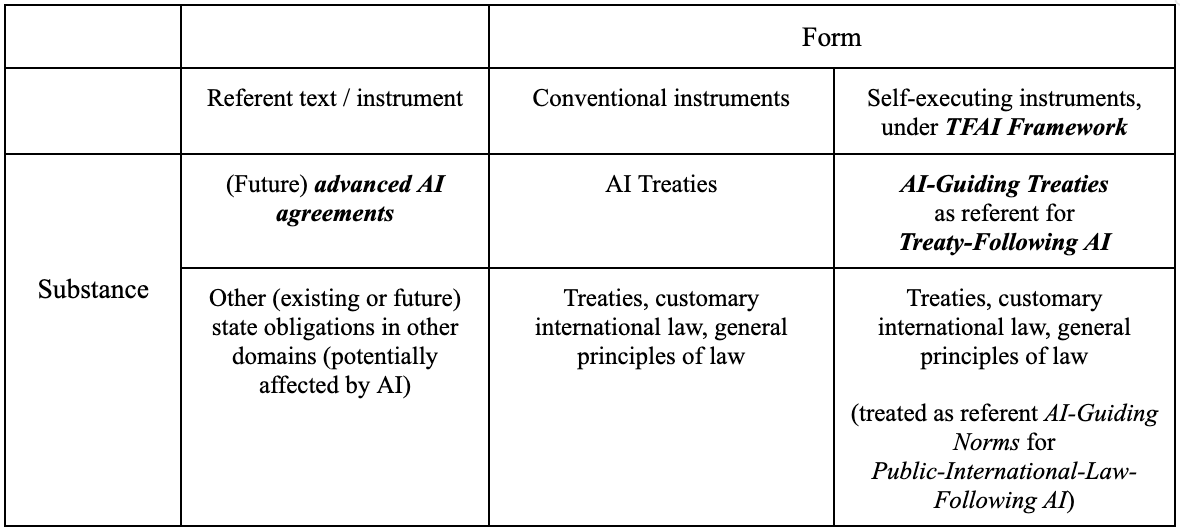
Table 1. Terminology, scope and focus of argument
As such, AI-Guiding Treaties demonstrate a high-leverage mechanism for self-executing state commitments. This mechanism could in principle be extended to all sorts of other treaties, in any other domains—from cyberwarfare to alliance security guarantees, from bilateral trade agreements to export control regimes, and even human rights or environmental law regimes—where AI agents could become involved in carrying out large fractions of their deploying states’ conduct. However, for the present, we focus on applying the TFAI framework to bespoke AI-guiding treaties (see Table 1) and leave this question of how to configure AI agents to follow other (non-AI-specific) legal obligations to future work. After all, if the TFAI framework cannot operate in this more circumscribed context, it will likely also fall flat in the context of other international legal norms and instruments. Conversely, if it does work in this narrow context, it could still be a valuable commitment mechanism for state coordination around advanced AI, even if it would not solve the problems of AI’s actions in other domains of international law.
B. The Need for International Agreements on Advanced AI
To appreciate the promise and value of a TFAI framework for states, international security, and international law, it helps to understand the range of goals that international agreements specific to advanced AI might serve to their parties43 as well as the political and technical hurdles such agreements might face in a business-as-usual scenario that would see a proliferation of “lawless” AI agents44 engaging in highly unpredictable or erratic behaviour.45
Like other international regimes aimed at facilitating coordination or collaboration by states,46 AI treaties could serve many goals and shared national interests. For example, they could enshrine clearly agreed restrictions or red lines to AI systems’ capabilities, behaviours, or usage47 in ways that preserve and guarantee parties’ national security as well as international stability.48 There are many areas of joint interest for leading AI states to contract over.49 For instance, advanced AI agreements could impose mutually agreed limits on advanced AI agents’ ability to engage in uninterpretable steganographic reasoning or communication,50 or to carry out uncontrollably rapid automated AI research.51 They could also establish mutually agreed restraints on AI agent’s capacity, propensity, or practical useability to infiltrate designated key national data networks or to target those critical infrastructures through cyberattacks, to drive preemptive use of force in manners that ensure conflict escalation,52 to support coup attempts against (democratically elected or simply incumbent) governments, or to engage in any other actions that would severely interfere with the national sovereignty of signatory (or allied, or any) governments.53
On the flip side, international AI agreements could also be aimed not just at avoiding the bad, but at achieving significant good. For instance, many have pointed to the strategic, political, and ethical value of conditional AI benefit-sharing deals:54 international agreements through which states leading in AI commit to some proportional or progressive sharing of the future benefits derived from AI technology with allies, unaligned states, or even with rival or challenger states. Such bargains, it is hoped, might help secure geopolitical stability, avert risky arms races or contestation by states lagging in AI,55 and could moreover ensure a degree of inclusive global prosperity from AI.56
C. Political hurdles and technical threats to advanced AI agreements
However, it is likely that any advanced AI agreements would encounter many hurdles, both political and technical, which will need to be addressed.
1. Political hurdles: Transparency-security tradeoffs and future enforceability challenges
For one, international security agreements face challenges around the intrusive monitoring they may require to guarantee that all parties to the treaty instruct and utilize their AI systems in a manner that remains compliant with the treaty’s terms. Such monitoring is likely to risk revealing sensitive information, resulting in a “security-transparency tradeoff” which has historically undercut the prospects for various arms control agreements57 and which could do so again in the case of AI security treaties.
Simultaneously, asymmetric treaties, such as those conditionally promising a share of the benefits from advanced AI technologies, face potential (un)enforceability problems: those states that are lagging in AI development might worry that any such promises would not be enforceable and could easily be walked back, if or as the AI capability differential between them and a frontier AI state grew particularly steep, in a manner that resulted in massively lopsided economic, political, or military power.58
2. Technical threats: hijacked, misaligned, or “henchmen” agents
Other hurdles to AI treaties would be technical. For many reasons, states might be cautious in overrelying on or overtrusting lawless AI agents in their services. After all, even fairly straightforward and non-agentic AI systems used in high-stakes governmental tasks (such as military targeting or planning) can be prone to unreliability, adversarial input, or sycophancy (the tendency of AI systems to align their output with what the user believes or prefers, even if that view is incorrect).59
Moreover, AI systems can demonstrate surprising and functionally emergent capabilities, propensities, or behaviours.60 In testing, a range of leading LLM agents have autonomously resorted to risky or malicious insider behaviours (such as blackmail or leaking sensitive information) when faced with the prospect of being replaced with an updated version or when their initially assigned goal changed with the company’s changing direction; often, they did so even while disobeying direct commands to avoid such behaviours.61 This suggests that highly versatile AI agents may threaten various loss of control (LOC) scenarios—defined by RAND as “situations where human oversight fails to adequately constrain an autonomous, general-purpose AI, leading to unintended and potentially catastrophic consequences.”62 In committing such actions, AI agents will impose unique challenges to questions of state compliance with their international legal obligations, since these systems may well engage in actions that violate key obligations under particular treaties, or which inflict transboundary harms, or which violate peremptory norms (jus cogens) or other applicable principles of international law.
Beyond the direct harm threatened by AI agents taking these actions, there would be the risk that if they were attributed to the deploying state it would likely threaten the stability of the treaty regime, spark significant political or military escalation, and/or expose a state to international legal liability,63 enabling injured states to take unfriendly measures of retorsion (e.g., severing diplomatic relations) or even countermeasures that would otherwise be unlawful (e.g., suspending treaty obligations or imposing economic sanctions that would normally violate existing trade agreements).64
Why might we expect some AI agents to engage in such actions that violate their principal’s treaty commitments or legal obligations? There are several possible scenarios to consider.
For one, there are risks that AI agents can be attacked, compromised, hijacked, or spoofed by malicious third parties (whether acting directly or through other AI agents) using direct or indirect prompt injection attacks,65 spoofing, faked interfaces, IDs or certificates of trust,66 malicious configuration swaps,67 or other adversarial inputs.68 Such attacks would compromise not just the agents themselves, but also all systems they were authorized to operate in, given that major security vulnerabilities have been found in publicly available AI coding agents, including exploits that grant attackers full remote code-execution user privileges.69
Secondly, there may be a risk that unaligned AI agents would themselves insufficiently consider—or even outright ignore—their states’ interests and obligations in undertaking certain action paths. As evidenced by a growing body of both theoretical arguments70 and empirical observation,71 it is difficult to design AI systems that reliably obey any particular set of constraints provided by humans,72 especially where these constraints refer not to clearly written out texts but aim to also build in consideration of the subjective intents or desires of the principal.73 As such, AI agents deployed without care could frequently prove unaligned; that is, act in ways unrestrained by either normative codes74 or by the intent of their nominal users (e.g., governments).75 In the absence of adequate real-time failure detection and incident response frameworks,76 such harms could escalate swiftly. In the wake of significant incidents, one would hope that governments might (hopefully) soon wisen up to the inadvisability of deploying such systems without adequate oversight,77 but not, perhaps, before incurring significant political costs, whether counted in direct harm or in terms of lost global trust in their technological competence.
Thirdly, even if deployed AI agents could be successfully intent-aligned to their state principals,78 the use of narrowly loyal-but-lawless AI systems, which are left free to engage in norm violations that they judge in their principal’s interest, would likely expose their deploying states to significant political costs. To understand why this is, it is important to see the technical challenge of loyal-but-lawless AI agents in a broader political context.
3. Lawless AI agents, political exposure, and commitment challenges
Taken at face value, the development of AI systems that are narrowly loyal to a governments’ directives and intentions, even to the exclusion of that governments’ own legal precommitments, might appear a desirable prospect to some political realists. In practice, however, many actors may have both normative and self-interested reasons to be wary of loyal-but-lawless AI agents engaging in actions that are in legal grey areas—or outright illegal—on their behalf. At the domestic level, such AI “henchmen” would create significant legal risks for consumers using them79 and for corporations developing and deploying them.80 They would also create legal risks for government actors, who might find themselves violating public administrative law or even constitutions,81 as well as political risks, as AI agents that could be made loyal to particular government actors could well spur ruinous and destabilizing power struggles.82 Just so, many states might find AI henchmen a politically poisoned fruit at the international level.
After all, not only could such AI agents be intentionally ordered by state officials to engage in conduct that violates or subverts those states’ treaty obligations, these systems’ autonomy also suggests that they might engage in such unlawful actions even without being explicitly directed to do so. That is, loyal-but-lawless AI henchmen could engage in calculated treaty violations whenever they judge them to be to the benefit of their principal.83 However, outside actors, finding it difficult to distinguish between AI agent behaviour that was deliberately directed versus henchman actions that were advantageous but unintended, might assume the worst in each case.
Significantly, in such contexts, the ambiguity of adversarial actions would frequently translate into perceptions of bad faith; in this way, loyal-but-lawless AI agents’ ability to violate treaties autonomously, and to do so in a (facially) deniable manner, as henchmen acting in their principals’ interests but not on their orders, perversely creates a commitment challenge for their deploying states, one which would erode states’ ability to effectively conduct (at least some) treaties. After all, even if a state intended to abide by its treaty obligations in good faith, it would struggle to prove this to counterparties unless it could somehow guarantee that its AI agents could not be misused and will not act as deniable henchmen whenever convenient.
This would not mean that states would no longer be able to conduct any such treaties at all; after all, there would remain many other mechanisms—from reputational costs to the risk of sparking reciprocal noncompliance—that might still incentivize or compel states’ compliance with such treaties.
However, lawless AI agents’ unpredictability poses a significant and severe challenge insofar as they make treaty violations more likely. Of course, even today, even when states intend to comply with their international obligations, they may have trouble ensuring that their human agents consistently abide by those obligations. Such failures can occur for reasons of bureaucratic capacity84 and organizational culture,85 or they can happen as a result of the institutional breakdown of the rule of law, at worst resulting in significant rights abuses or humanitarian atrocities committed by junior members.86 Such incidents may, at best, frustrate states’ genuine intention to achieve the goals enshrined in the treaties they have consented to; in all cases, they can expose a state to significant reputational harm, legal and political censure, and adversary lawfare,87 while eroding domestic confidence in the competence or integrity of its institutions.
Significantly, lawless AI agents would likely exacerbate the risk that their deploying states would (be perceived to) use them strategically to engage in violations of treaty obligations in a manner that would afford some fig leaf of deniability if discovered. This is for a range of reasons: (1) treaties often prevent states from engaging in actions that at least some large fraction of a state’s human agents would prefer not to engage in; loyal-but-lawless AI agents would not have such moral side constraints and would be far more likely to obey unethical or illegal requests. Moreover, (2) loyal-but-lawless AI agents would be less likely to whistleblow or leak to the presses following the violation of a treaty (and, correspondingly, would need to worry less about their fellow AI colleagues or collaborators doing so, meaning they could exchange information more freely); (3) loyal-but-lawless AI agents would have little reason to worry about personal consequences for treaty violations (e.g., foreign sanctions, asset freezing, travel restrictions, international criminal liability) that might deter human agents; (4) loyal-but-lawless AI agents would have less reason to worry about domestic legal or career repercussions (e.g., criminal or civil penalties, costs to their reputation or career) associated with aiding a violation of treaty obligations that could later become disfavored should domestic political winds shift; and (5) AI agents may be better at hiding their actions and their/their principals’ identity, thus making them more likely to opportunistically violate the treaty.88
These are not just theoretical concerns but are supported by empirical studies, which have indicated that human delegation of tasks to AI agents can increase dishonest behaviours, as human principals often find ways to induce dishonest AI agent behaviour without telling them precisely what to do; crucially, such cheating requests saw much higher rates of compliance when directed at machine agents than when they were addressed to human agents.89 For all these reasons, then, the widespread use of AI agents is likely to exacerbate international concerns over either deliberate or unwitting violations of treaty obligations by their deploying state.
As such, on the margin, the deployment of advanced agentic AIs acting under no external constraints beyond their states’ instructions would erode not just the respect for many existing norms in international law but also the prospects for new international agreements, including those focused on stabilizing or controlling the use of this key technology.
D. The TFAI framework as commitment mechanism and cooperative capability
Taken together, these challenges could put significant pressure on international advanced AI agreements and could more generally threaten the prospects for stable international cooperation in the era of advanced AI.
Conversely, an effective framework by which to guarantee that AI agents would adhere to the terms of their treaty could address or even invert these challenges. For one, it could help ease the transparency-security tradeoff by embedding constraints on AI agents’ actions at the level of the technology itself. It could crystallize (potentially) nearly irrevocable commitments by states to share the future benefits from AI with other states or to guarantee investor protections under more inclusive “open global investment” governance models.90
More generally, the TFAI framework is one way by which AI systems could help expand the affordances and tools available to states, realizing a significant new cooperative capability91 that would greatly enhance their ability to make robust and lasting commitments to each other in ways that are not dependent on assumptions of (continued) good faith. Indeed, correctly configured, it could be one of many coordination-enabling applications of AI that could strengthen the ability of states (and other actors) to negotiate in domains of disagreement and to speed up collaboration towards shared global goals.92
Finally, the ability to bind AI agents to jointly agreed treaties has many additional advantages and co-benefits; for one, it might mitigate the risk that some domestic (law-following) AI agents, especially in multi-agent systems, become engaged in activities with cross-border effects that end up simultaneously subjecting them to different sets of domestic law, resulting in conflict-of-law challenges.93
E. Caveats
That said, the proposal for exploration and application of a TFAI framework comes with a number of caveats.
For one, in exploring the prospects for states to conduct new AI-specific treaty regimes (i.e., advanced AI agreements) by which to bind the actions of AI agents, we do not suggest that only these novel treaty regimes would ground effective state obligations around the novel risks from advanced AI agents. To the contrary, since many norms in international law are technology-neutral, there are already numerous binding and non-binding norms—deriving from treaty law, international custom, and general principles of law—that apply to states’ development and deployment of advanced AI agents94 and which would provide guidance even for future, very advanced AI systems.95 As such, as noted by Talita Dias,
“while the conversation about the global governance of AI has focussed on developing new, AI-specific rules, norms or institutions, foundational, non-AI-specific global governance tools already govern AI and AI agents globally, just as they govern other digital technologies. [since] International law binds states—and, in some circumstances, non-state actors—regardless of which tools or technologies are used in their activities.”96
This means that one could also consider a more expansive project that would examine the case for fully “public international law-following AI” (see again Table 1). Nonetheless, as discussed before, in this article, we focus on the narrower and more modest framework for treaty-following AI. This is because a focus on AI that follows treaties can serve as an initial scoping exercise to investigate the feasibility of extending any law-following AI–like framework to the international sphere at all: if this exercise does not work, then neither would more ambitious proposals for public international law-following AI. Conversely, if the TFAI framework does work, it is likely to offer significant benefits to states (and to international stability, security, and inclusive development), even if subjecting AI systems to the full range of international legal norms proved more difficult, legally or politically.
Thirdly, in discussing potential AI-guiding treaties, we note that there exist a wide range of reasons by which states might wish to strike such international deals and agreements, and/or find ways to enshrine stronger technology-enabled commitments to comply with their obligations under those instruments. However, we do not aim to prescribe particular goals or substance for advanced AI agreements or to make strong claims about these treaties’ optimal design97 or ideal supporting institutions.98 We realize that substantive examples would be useful; however, given that there is currently still such pervasive debate over which particular goals states might converge on in international AI governance, this paper aims at the modest initial goal of establishing the TFAI framework as a relatively transferable, substance-agnostic commitment mechanism for states.
III. The Foundations and Scope of Treaty-Following AI
While the idea of designing AI agents to be treaty-following might seem unorthodox on its face, it is hardly without precedent or roots. Rather, it draws on an established tradition of scholarship in cyber and technology law, which has explored the ways through which legal norms and regulatory goals may be directly embedded in (digital) technologies,99 including in fields such as computational law.100
Simultaneously, the idea of aligning AI systems with normative codes can moreover draw inspiration from, and complement, many other recent attempts to articulate frameworks for oversight and alignment of agents, including by establishing fiduciary duties amongst AI agents and their principals,101 articulating reference architectures for the design components necessary for responsible AI agents,102 drawing on user-personalized oversight agents103 or trust adjudicators,104 or articulating decentralized frameworks, rooted in smart contracts for both agent-to-agent and human-AI agent collaborations.105
Significantly, in the past, some early scholarship in cyberlaw and computational law expressed justifiable skepticism over the feasibility of developing some form of artificial legal intelligence’ grounded in an algorithmic understanding of law106 or of using then-prevailing approaches to manually program complex and nuanced legal codes into software algorithms.107 Nonetheless, we might today find reason to re-examine our assumptions over AI technology. After all, the modern lineage of advanced AI models, based on the transformer architecture,108 operates through a distinct bottom-up learning paradigm that is fundamentally distinct from the older, top-down symbolic programming paradigm once prevalent in AI.109 Consequently, the idea of binding or aligning AI systems to legal norms, specified in natural language, has been given growing credit and attention not just in the broader fields of technology ethics110 and AI alignment,111 but also in legal scholarship written from the perspective of legal theory, domestic law,112 and international law.113
A. From law-following to treaty-following AI
The law-following AI (LFAI) proposal by O’Keefe and others is, in a sense, an update to older computational law work, envisioned as a new framework for the development and deployment of modern, advanced AI. In their view, LFAI pursues:
“AI agents […] designed to rigorously comply with a broad set of legal requirements, at least in some deployment settings. These AI agents would be loyal to their principals, but refuse to take actions that violate applicable legal duties.”114
In so doing, the LFAI framework aims to prevent criminal misuse, minimize the risk of accidental and unintended law-breaking actions undertaken by AI ‘henchmen’, help forestall abuse of power by government actors,115 and inform and clarify the application of tort liability frameworks for AI agents.116 The LFAI proposal envisions that, especially in “high stakes domains, such as when AI agents act as substitutes for human government officials or otherwise exercise government power”,117 AI agents are designed in a manner that makes them autonomously predisposed to obey applicable law; or, more specifically,
“AI agents [should] be designed such that they have ‘a strong motivation to obey the law’ as one of their ‘basic drives.’ … [W]e propose not that specific legal commands should be hard-coded into AI agents (and perhaps occasionally updated), but that AI agents should be designed to be law-following in general.”118
By extension, for an AI agent to be treaty-following, it should be designed to generally follow its principals’ instructions loyally but refuse to take actions that violate the terms and obligations of a designated applicable referent treaty.
As discussed above, this means that the TFAI framework decomposes into two components: we will use TFAI agent to refer to the technical artefact (i.e., the AI system, including not just the base model but also the set of tools and scaffolding119 that make up the overall compound AI system120 that can act coherently as an agent) that has its conduct aligned to a legal text. Conversely, we use AI-guiding treaty121 to refer to the legal component (i.e., the underlying treaty text and, secondarily, its institutional scaffolding).
If technically and legally feasible, the promise of the TFAI framework lies in the ability to provide a guarantee of automatic self-execution for, and state party compliance with, advanced AI agreements, while requiring less pervasive or intrusive human inspections.122 They could therefore mitigate the security-transparency tradeoff and render such agreements more politically feasible.123 Moreover, ensuring that states deploy their AI agents in such a manner as to make them treaty-following, ensures that AI treaties are politically robust against AI agents acting in a misaligned manner. Specifically, the use of AI-guiding treaties and treaty-following AIs to institutionalize self-executing advanced AI agreements would preclude states’ AI agents from acting as henchmen that might engage in treaty violations for short-term benefit to their principal. Taking such behaviour off the table at a design level, would help crystallize an ex ante reciprocal commitment amongst the contracting states, allowing them to reassure each other that they both intend to respect the intent of the treaty, not just its letter.
Finally, just as domestic laws may constitute a democratically legitimate alignment target for AI systems in national contexts,124 treaties could serve as a broadly acceptable, minimum normative common denominator for the international alignment of AI systems. After all, while international (treaty) law does not necessarily represent the direct output of a global democratic process, state consent does remain at the core of most prevailing theories of international law.125 That is not to say that this makes such norms universally accepted or uncontestable. After all, some (third-party) states (or non-state stakeholders) may perceive some treaties as unjust; others might argue that demanding mere legal compliance with treaties as the threshold for AI alignment is setting the bar too low.126 Nonetheless, the fact that treaty law has been negotiated and consented to by publicly authorized entities such as states might at least provide these codes with a prima facie greater degree of political legitimacy than is achieved by the normative codes developed by many alternative candidates (e.g., private AI companies; NGOs; single states in isolation).127
Practically speaking, then, achieving TFAI would depend on both a technical component (TFAI agents) and a legal one (AI-guiding treaties). Let us review these in turn.
B. TFAI agents: Technical implementation, operation, and feasibility
In the first place, there is a question of which AI agents should be considered as within the scope of a TFAI framework: Is it just those agents that are deployed by a state in specific domains, or all agents deployed by a contracting state (e.g., to avoid the loophole whereby either state can simply evade the restrictions by routing the prohibited AI actions through agents run by a different government department)? Or is it even all AI agents operating from a contracting state’s territory and subject to that state’s domestic law? For the purposes of our analysis, we will focus on the narrow set, but as we will see,128 these other options may introduce new legal considerations.
That then shifts us to questions of technical feasibility. The TFAI framework requires that a state’s AI agents would be able to access, weigh, interpret, and apply relevant legal norms to its own (planned) goals or conduct in order to assess their legality before taking any action. How feasible is this?
1. Minimal TFAI agent implementation: A treaty-interpreting chain-of-thought loop
There are, to be clear, many possible ways one could go about implementing treaty-alignment training. One could imagine nudging the model towards treaty compliance by affecting the composition of either its pre-training data, its post-training fine-tuning data, or both. In other cases, future developments in AI and in AI alignment could articulate distinct ways by which to implement treaty-following AI propensities, guardrails, or limits.
In the near term, however, one straightforward avenue by which one could seek to implement treaty-following behaviour would leverage the current paradigm, prominent in many AI agents, towards utilizing reasoning models. Reasoning models are a 2024 innovation on transformer-based large language models that allows such models to simulate thinking aloud about a problem in a chain of thought (CoT). The model uses the legible CoT to forward notes to itself, and to accordingly run multiple passes or attempts on one question, and to use reasoning behaviours—such as expressing uncertainty, generating examples for hypothesis validation, and backtracking in reasoning chains. All of this has resulted in significantly improved performance on complex and multistep reasoning problems,129 even as it has also considerably altered the development and diffusion landscape for AI models,130 along with the levers for its governance.131
Note that our claim is not that a CoT-based implementation of treaty alignment is the ideal or most robust avenue to achieving TFAI agents;132 however, it may be a straightforward avenue by which to understand, test, and grapple with the ability of models to serve in a TFAI agent role.
Concretely, a TFAI agent implemented through a CoT decision loop could work as follows: Prior to accepting a goal X or undertaking an action Y, an AI agent might spend some inference computing time writing out an extended chain-of-thought reasoning process in which it collates or recalls potentially applicable legal provisions of the treaty text, considers their meaning and application in the circumstances before it, and in particular reflects on potential treaty issues entailed by its provided end goal or its planned intermediate conduct towards that goal. Whenever confronted with legal uncertainty, the agent would dedicate further inference time to searching for relevant legal texts and interpretative sources in order to resolve the question and reach a decision over the legality of its goals or actions.
For instance, one staged inference decision-making loop for such a system could involve a reasoning process133 that iterates through some or all of the following steps:
- AI agent identifies potential treaty issues entailed by the provided end goal or intermediate conduct towards that goal (e.g., it identifies if a goal is facially illegal, or it identifies likely issues with formulating a lawful plan of conduct in service of an otherwise lawful goal).
- AI agent identifies an applicable treaty provision that might potentially (but not clearly) be breached by a planned goal or intermediate conduct; it reasons through possible and plausible interpretations of the provision in light of the applicable approach to treaty interpretation.
- In cases where the treaty text alone would not provide adequate clarity, the AI agent may, depending on the AI-guiding treaty design (discussed below), consider other relevant and applicable norms in international law or the rulings of a designated arbitral body attached to the treaty, in order to establish a ranking of interpretations of the legality of the goal or conduct.
- On this basis, the AI agent evaluates whether the likelihood of its conduct constituting a breach is within the range of “acceptable legal risk” (as potentially defined within the treaty, through arbitral body adjudication, or in other texts).
- If it is not, the AI agent refuses to take the action. If it is, the AI agent will proceed with the plan (or proceed to consider other cost-benefit analyses).
This decision-making loop would conclude in a final assessment of whether particular conduct would be (sufficiently likely to constitute134) a breach of a treaty obligation and, if so, an overall refusal on behalf of the agent to take that action, and the consideration (or suggestion) for alternate action paths.
The above is just one example of the decision loops one could implement in TFAI agents to ensure their behaviour remained aligned with the treaty even in novel situations. There are of course many other variations or permutations that could be implemented, such as utilizing some kind of debate- or voting-based processes amongst collectives or teams of AI agents.
In practice, the most appropriate implementation would also consider technical, economic, and political constraints. For instance, for an AI agent to undertake a new and exhaustive legal deep dive for each and every situation encountered might be infeasible, given the constraints on, or costs of, the computing power available for serving such extended inference at scale. However, there are a range of solutions that could streamline these processes. For example, perhaps TFAIs could use legal intuition to decide when it is worth expending time during inference to properly analyse the legality of a goal or action. By analogy, law-following humans do not always consult a lawyer (or even primary legal texts) when they decide how to act; they instead generally rely on prosocial behavioural heuristics that generally keep them out of legal trouble, and generally only consult lawyers when they face legal uncertainty or when those heuristics are likely to be unreliable. Other solutions might include cached databases containing the chain-of-thought reasoning logs of other agents encountering similar situations, or the designation of specialized agents that could serve up legal advice on particular commonly recurring questions. These questions matter, as it is important to ensure that the implementation of TFAI agents does not impose so high a burden upon AI agents’ utility or cost-effectiveness as to offset the benefits of the treaty for the contracting states.
2. Technical feasibility of TFAI agents
As the above discussion shows, TFAI agents would need to be capable of a range of complex interpretative tasks.
Certainly, we emphasize that there remain significant technical challenges and limitations to today’s AI systems,135 which warn against a direct implementation of TFAI. Nonetheless, although there are important hurdles to overcome, there are also compelling reasons to expect that contemporary AI models are increasingly adept at interpreting (and following) legal rules and may soon do so at the level required for TFAI.
a) The rise of legal AI in international law
Recent years have seen growing attention on the ways that AI systems can be used in support of the legal profession in tasks ranging from routine case management or compliance support by providing legal information136 to drafting legal texts137 or even in outright legal interpretation.138
This has been gradually joined by recent work on the ways in which AI systems could support international law139 and on what effects this may have on the concepts and modes of development of the international legal system.140 To date, however, much of this latter work has focused on how AI systems and agents could indirectly inform global governance through use in analysing data for trends of global concern;141 training diplomats, humanitarian and relief workers, or mediators in simulated interactions with stakeholders they may encounter in their work;142 or improving the inclusion of marginalized groups in UN decision-making processes.143
Others have explored how AI agents systems could be used to support the functioning of international law specifically, such as through monitoring (state or individual) conduct and compliance with international legal obligations;144 categorizing datasets, automating decision rules, and generating documents;145 or facilitating proceedings at arbitral tribunals,146 treaty bodies,147 or international courts.148 Other work has considered how AI systems can support diplomatic negotiations,149 help inform legal analysis by finding evidence of state practice,150 or even aid in generating draft treaty texts.151
However, for the purposes of designing TFAI agents, we are interested less in the use of AI systems in making or developing international law, or in indirectly aiding in human interpretation of the law; rather, we are focused on the potential use of AI systems in directly and autonomously interpreting international treaties or international law to guide their own behaviour.
b) Trends and factors in AI agents’ legal-reasoning capabilities
Significantly, the prospects for TFAI agents engaging autonomously in the interpretation of legal norms may be increasingly plausible. In recent years, AI systems have demonstrated increasingly competent performance at tasks involving legal reasoning, interpretation, and the application of legal norms to new cases.152
Indeed, AI models perform increasingly well at interpreting not just national legislation, but also in interpreting international law. While international law scholars previously expressed skepticism over whether international law would offer a sufficiently rich corpus of textual data to train AI models,153 many have since become more optimistic, suggesting that there may in fact be a sufficiently ample corpus of international legal documents to support such training. For instance, already in 2020, Deeks has noted that:
“[o]ne key reason to think that international legal technology has a bright future is that there is a vast range of data to undergird it. …there are a variety of digital sources of text that might serve as the basis for the kinds of text-as-data analyses that will be useful to states. This includes UN databases of Security Council and General Assembly documents, collections of treaties and their travaux preparatoires (which are the official records of negotiations), European Court of Human Rights caselaw, international arbitral awards, databases of specialized agencies such as the International Civil Aviation Organization, state archives and digests, data collected by a state’s own intelligence agencies and diplomats (memorialized in internal memoranda and cables), states’ notifications to the Security Council about actions taken in self-defense, legal blogs, the UN Yearbook, reports by and submission to UN human rights bodies, news reports, and databases of foreign statutes. Each of these collections contains thousands of documents, which—on the one hand—makes it difficult for international lawyers to process all of the information and—on the other hand provides the type of ‘big data’ that makes text-as-data tools effective and efficient.”154
Consequently, it appears to be the case that modern LLM-based AI systems have therefore been able to draw on a sufficiently ample corpus of international legal documents or have managed to leverage transfer learning155 from domestic legal documents, or both, to achieve remarkable performance on questions of international legal interpretation.
Indeed, it is increasingly likely that AI models can not only draw on their indirect knowledge of international legal texts because of their inclusion in their pre-training data, but that they will be able to refer to those legal texts live during inference. After all, recent advances in AI systems have produced models that can rapidly process and query increasingly large (libraries of) documents within their context window.156 Since mid-2023, the longest LLM context windows have grown by about 30x per year, and leading LLMs’ ability to leverage that input has improved even faster.157 Beyond the significant implications this trend may have for the general capabilities and development paradigms for advanced AI systems,158 it may also strengthen the case for functional TFAI agents. It suggests that AI agents may incorporate lengthy treaties159—and even large parts of the entire international legal corpus160—within their context window, ensuring that these are directly available for inference-time legal analysis.161
Consequently, recent experiments conducted by international lawyers have shown remarkable performance gains in the ability of even publicly available non-frontier LLM chatbots to conduct robust exercises of legal interpretation in international law. This has included not just questions involving direct treaty interpretation, but also those regarding the customary international law status of a norm.162 At least on their face, the resulting interpretations frequently are—or appear to be—if not flawless, then nonetheless coherent, correct, and compelling to experienced international legal scholars or judges.163 For instance, in one experiment, AI-generated memorials were submitted anonymously to the 2025 edition of the prestigious Jessup International Law Moot Court Competition, receiving average to superior scores—and in some cases near-perfect scores.164 That is not to say that their judgments always matched human patterns, however: in another test involving a simulated appeal in an international war crimes case, GPT-4o’s judgments resembled those of students (but not professional judges) in that they were strongly shaped by judicial precedents but not by sympathetic portrayals of defendants.165
3. Outstanding technical challenges for TFAI agents
AI’s legal-reasoning performance today is not without flaws. Indeed, there are a number of outstanding technical hurdles that will need to be addressed to fully realize the promise of TFAI.
a) Robustness of AI legal reasoning and law-alignment techniques
Some of these challenges relate to the robustness of AI’s legal-reasoning performance, in terms of current LLMs’ ability to robustly follow textual rules166 and to conduct open-ended multistep legal reasoning.167 Problematically, these models also remain highly sensitive in their outputs to even slight variations in input prompts;168 moreover, a growing number of judicial cases has seen disputes over the use of AI systems in drafting documents in ways that raised issues of hallucinated AI-generated content being brought before a court.169 Significantly, hallucination risks have proven extant even when legal research providers have attempted to use methods such as retrieval-augmented generation (RAG).170
Indeed, even in contexts where LLMs perform well on legal tests, proper substantive legal analysis that actually applies the correct methodologies of legal interpretation remains amongst their more challenging tasks. For instance, in the aforementioned moot court experiment, judges found AI-generated memorials to be strong in organization and clarity, but still deficient in substantive analysis.171 Another study of various legal puzzles found that current AI models cannot yet reliably find “legal zero-days” (i.e., latent vulnerabilities in legal frameworks).172
Underpinning these problems, the TFAI framework—along with many other governance measures for AI agents—faces a range of challenges to do with benchmarking and evaluation. That is, there are significant methodological challenges around meaningfully and robustly evaluating the performance of AI agents:173 It is difficult to appropriately conduct evaluation concept development (i.e., refining and systematizing evaluation concepts and their related metrics for measurements) for large state and action spaces with diverse solutions; it can be difficult to understand how proxy task performance reflects real-world risks; there are challenges in determining the system design set-up (i.e., understanding how task performance relates to external scaffolds or tools made available to the agent); and challenges in scoring performance and analysing results (e.g., to meaningfully compare for differences in modes of interaction between humans and AI systems), as well as practical challenges around dealing with more complex supply chains around AI agents, amongst other issues.174
These evaluation challenges around agents converge and intersect with a set of benchmarking problems affecting the use of AI systems for real-world legal tasks,175 with recent work identifying issues such as subjective labeling, training data leakage, and appropriate evaluations for unstructured text as creating a pressing need for more robust benchmarking practices for legal AI.176 While this need not in principle pose a categorical barrier to the development of functional TFAI agents, it will likely hinder progress towards them; worse, it will challenge our ability to fully and robustly assess whether and when such systems are in fact ready for the limelight.
These challenges are also compounded by currently outstanding technical questions over the feasibility of many existing approaches towards guaranteeing the effective and enduring law alignment (or treaty alignment) of AI systems,177 since many outstanding training techniques remain susceptible to AI agents’ engaging in alignment faking (e.g., strategically adjusting their behaviour when they recognize that they are under evaluation),178 as well as to emergent misalignment, whereby models violated clear and present prohibitions in their instructions when those conflicted with perceived primary goals.179 This all suggests that, like the domestic LFAI framework, a TFAI framework remains dependent on further technical research into embedding more durable controls on model behaviour, which cannot be overcome by sufficiently strong incentives.180
b) Unintended or intended bias
Second, there are outstanding challenges around the potential for unintended (or intended) bias in AI models’ legal responses. Unintended bias can be seen, for instance, in instances where some LLMs demonstrate demographic disparities in attributing human rights between different identity groups.181
However, there may also be risks of (the perception of) intended bias, given the partial interests represented by many publicly available AI models. For instance, the values and dispositions of existing LLMs are deeply shaped by the interests of the private companies that develop them; this may even leave their responses open to intentional manipulation, whether undertaken through fine-tuning, through the application of hidden prompts, or through filters on the models’ outputs.182 Such concerns would not be allayed—and in some ways might be further exacerbated—even if TFAI models were developed or offered not by private actors but by a particular government.183
There are some measures that might mitigate such suspicions; treaty parties could commit for instance to making the system prompt (the hidden text that precedes every user interaction with the system, reminding the AI system of its role and values) as well as the full model spec (in this case, the AI-guiding treaty) public, as labs such as OpenAI, Anthropic, and x.AI have done;184 but this creates new verification challenges over ensuring that both parties’ TFAI agents in fact are—and remain—deployed with these inputs.185
c) Lack of faithfulness in chain-of-thought legal reasoning: sycophancy, sophistry, and obfuscation
Thirdly, insofar as we make the (reasonable, conservative) assumption that TFAI agents will be built along the lines of existing LLM-based architectures—and that the technical process of treaty alignment may leverage techniques of fine-tuning, model specs, and chain-of-thought monitoring of such systems—we must expect such agents to face a number of outstanding technical challenges associated with that paradigm. Specifically, the TFAI framework will need to overcome outstanding technical challenges relating to the lack of faithfulness of the legal reasoning that AI agents present themselves as engaging in (e.g., in their chain-of-thought traces) when (ostensibly) reaching legal conclusions. These result from various sources, including sycophancy, sophistry and rationalization, or outright obfuscation.
Critically, even though LLMs do display a degree of high-level behavioural self-awareness—as seen through their ability to describe and articulate features of their own behaviour186—it remains contested to what degree such self-reports can be said to be the consequence of meaningful or reliable introspection.187
Moreover, even if a model were capable of such introspections, those are not necessarily robustly understood on the basis of its reasoning traces. For instance, as legal scholars such as Ashley Deeks and Duncan Hollis have charted in recent empirical experiments, the faithfulness of AI models’ chain-of-thought transcripts cannot be taken for granted, creating a challenge in “differentiating how [an LLM’s] responses are being constructed for us versus what it represents itself to be doing.”188 They find that even when models are generally able to correctly describe the correct methodology for interpretation and present seemingly plausible legal conclusions for particular questions, they may do so in ways that fail to correctly apply those appropriate methods.189 To be precise, while the tested LLMs could offer correct descriptions of the appropriate methodology for identifying customary international law (CIL) and could offer facially plausible descriptions of the applicable CIL on particular doctrinal questions,190 when pressed to explain how they had arrived at these answers, it became clear that the AIs had failed to actually apply the correct methodology, instead conducting a general literature search that drew in doctrinally inappropriate sources (e.g., non-profit reports) rather than appropriate primary sources as evidence of state practice and opinio juris.191
Significantly, such infidelity in the explanations given in chain of thought by AI models is not incidental but may be deeply pervasive in these models. Even early research on large language models has found it easy to influence biasing features to model inputs in ways that resulted in the model systematically misrepresenting the reasoning for its own decision or prediction.192 Indeed, some have argued that given the pervasive and systematic unfaithfulness of chain-of-thought outputs to internal model computations, chain-of-thought reasoning should not be considered a method for interpreting or explaining models’ underlying reasoning at all.193
Worse, there may be other ways by which unfaithful explanations or even outright legal obfuscation could be unintentionally trained into AI models, rendering their chain-of-thought reasoning less faithful and trustworthy still.194 For instance, reinforcement learning from human feedback (RLHF), the most popular post-training method used to shape and refine the behaviour of LLMs for public use,195 has been found to have a number of shortcomings and limitations.196 One drawback is the propensity of RLHF fine-tuning to encourage models to offer responses that match user beliefs or preferences over truthfulness—a tendency described as “sycophancy”.197 This means that an TFAI agent could be at risk of offering strained or even flawed legal interpretations—or legal interpretations that assume possible-but-very-unlikely facts on the ground when these would afford an interpretation more favourable to their principal’s interests—in assessing the legality of its actions. These challenges can create a significant risk of individual or organizational overtrust198—as well as conflict amongst treaty parties over opposite interpretations pursued by their respective TFAI agents. Another challenge is the propensity of RLHF to induce sophistry, which results in models that are better at convincing humans that they are right without actually improving their actual competence at the task in question.199
Similar faithfulness challenges beset other proposed paradigms for ensuring that AI agents do not take harmful actions; for instance, one recently proposed set-up to mitigate such risks aims to monitor not only the final actions taken by the system, but also the chain of thought (i.e., intermediate reasoning steps) the model uses to decide on those actions.200 However, while research has suggested that the chains of thought of reasoning models are more faithful than those of traditional models (in that they are more able to describe how a cue in their prompt influences their answer),201 there are shortfalls to this approach.202
For one, reasoning models produce less faithful reasoning on many tasks as they become larger and more capable;203 moreover, not only can chain-of-thought reasoning traces still contain misleading rationalizations,204 experiments show fine-tuning AI systems through reinforcement learning on such reasoning traces in a way that penalizes open misbehaviour leads the models to instead learn to hide the penalized “thoughts” from its explicit chain of thought.205 Such obfuscation of the actual reasoning steps can be achieved either by their internalization to latent-space computation or their encoding within the chain of thought.206
There are limits to this: In some contexts, the faithfulness of the chain of thought is required in order for the AI model to meaningfully carry out complex, multistep reasoning processes. In these cases, unfaithful steps (involving rationalization) are likely to impede the system’s ability to solve certain problems because they introduce flawed steps into the reasoning process. In such cases, this suggests that the chain of thought faithfully encodes the underlying reasoning at play.207 However, it unfortunately seems unlikely that TFAI agents will converge towards “faithfulness by necessity”; after all, it seems like there are many legal questions for which inserting fudged premises or flawed rationalizations into the process of interpretation makes it easier to reach (a particular, or any) legal solution. This suggests that in many cases, rather than naturally converging on a high-quality, valid, and faithful legal-reasoning process in order to even be able to solve a legal question, TFAI agents could easily end up fooling themselves in the chain of thought.
Indeed, the faithfulness challenges are exacerbated by additional concerns over the sheer interpretability and legibility of the chain of thought of these models. After all, when models are rewarded for the correct answer, without any checks on how they got there, their chain-of-thought traces will likely drift away from ones that are easily comprehensible—as illustrated by the DeepSeek-R1-Zero model’s initial tendency to mix together English and Chinese in its reasoning.208 In other cases, there may be a risk that LLMs are induced to encode intermediate reasoning steps in the generated CoT text in a way that is not understandable to human readers;209 in some cases, this results in models developing a general encoding scheme to obfuscate their reasoning.210
Such behaviours not only pose a risk to the explainability or faithfulness of TFAI agents, but also create risks of undesirable agent collusion amongst different interacting TFAI agents,211 as their communications may come to contain steganographically hidden information (e.g., about legally invalid interpretive exploits they may utilize in expanding their domain of allowable actions), or even may involve “subliminal learning” of each other’s preferences or biases.212
Finally, the role of explicit chain-of-thought traces in driving the performance—and enabling the evaluation—of reasoning models might be undercut by future innovations. For instance, recent work has seen developments in “continuous thought” models, which reason internally using vectors (in what has been called “neuralese”).213 Because such models do not have to pass notes to themselves in an explicit CoT, they have no interpretable output that could be used to monitor them, interpret their reasoning, or even predict their behaviour.214 Given that this would threaten not just the faithfulness but even the monitorability of these agents, it has been argued that AI developers, governments, and other stakeholders should adopt a range of coordination mechanisms to preserve the monitorability of AI architectures.215
All this highlights the importance of ensuring that reason-giving TFAI agents are not trained or developed in a manner that would induce greater rates of illegibility or fabrication (of plausible-seeming but likely incorrect legal interpretations) into their legal analysis; either would further degrade the faithfulness of their reasoning reports and potentially erode the basis on which trusted TFAI agents might operate.
4. Open (or orthogonal) questions for TFAI agents
In addition to these outstanding technical challenges that may beset the design, functioning, or verification of TFAI agents, there are also a number of deeper underlying questions to be resolved or decided in moving forward with the TFAI framework—and in considering whether, or in what way, these agents’ actions in compliance with an AI-guiding treaty’s norms truly should be considered as cases of true (or at least appropriate) forms of legal reasoning, or if they should be considered as consistent and predictable patterns in treaty application.216
a) Do TFAI agents need to be explainable or merely monitorable?
The need to understand AI systems’ decision-making is hardly new, as emphasized by the well-established field of explainable AI (XAI),217 which has also been emphasized in judicial contexts.218 In fact, alongside chain-of-thought traces, there are many other (and many superior) approaches to understanding the actual inner workings of AI models. For instance, recent years have seen some progress in the field of mechanistic interpretability, which aims at understanding the inner representation of concepts in LLMs.219
However, one could question whether full explainability—whether delivered through highly faithful and legible CoT traces, through mechanistic interpretability, or through some other approach—is even strictly necessary for AI systems to qualify for use as TFAI agents.
Many legal scholars might emphasize the legibility and faithfulness of a model’s legal-reasoning traces as a key proviso, especially under legal theories built upon the importance of (judicial) reason-giving220 as well as under emerging international legal theories of appropriate accountability in global administrative law.221
Moreover, the lack of faithfulness could impose a significant political or legitimacy challenge on the TFAI framework. After all, to remain acceptable to—and trusted by—all treaty parties, it is possible that a TFAI framework would ideally ensure that TFAI agents are able to reason through the legality of their goals or conduct in a way that is not just legible and plausibly legally valid in its conclusions, but which in fact applies the appropriate methods of treaty interpretation (either under international law or as agreed upon by the contracting parties).222
On the other hand, a more pragmatic perspective might not see faithfulness as strictly politically necessary to AI-guiding treaties. For instance, some AI safety work has argued that, even if we cannot use a model’s chain-of-thought record to faithfully understand its actual underlying (legal) reasoning, we might still use it as the basis for model monitorability since it can allow us to robustly predict the conditions when it is likely to change its judgment of the legality of particular behaviour.223 This implies that the negotiating treaty parties could simply stress-test TFAI agents until they agree that the agents appear to reach the correct (or at least, mutually acceptable) legal interpretations of the treaty in all cases, which are free of undue influence or bias, even if they cannot directly confirm that the agents use the conventionally correct methodology in reaching the conclusions.
Of course, even in this more pragmatic perspective, faithfulness could still be technically important in understanding the sources of interpretative error in the aftermath of a (supposedly) treaty-aligned TFAI agent violating obvious obligations; and it would (therefore) be politically important to ensuring state party trust in the stability, predictability, and robustness of the treaty-alignment checks. However, in such a case, the question of whether the model reaches the appropriate legal conclusions through the correct (or even a distinctly human) method of legal reasoning is ultimately subsidiary to the question of whether a model robustly and predictably reaches interpretations that are acceptable to the contracting parties.
Proponents of this pragmatic approach might reasonably suggest that this would not put us in a different situation from one we already accept with human judges; after all, we already accept that we cannot read the mind of a judge and that we often need to accept their claimed legal reasoning at face value—not in the sense that we must accept the substance of their proffered legal arguments uncritically but in the sense that we need to assume that it represents a faithful representation of the internal thought process that underpinned their judgment. Even amongst human judges, after all, we appear to rely on a form of monitorability (i.e., the consistency in judges’ judgments across similar cases and their incorruptibility to inadmissible factors, considerations, biases, or interests) when evaluating the quality and integrity of their legal reasoning across cases.224
However, to this above point, it could be countered that an important difference between human judges and AI systems is that we have some prima facie (psychological, neurological, and biological) reasons to assume that the underlying legal concepts and principles used by (human) interpreters in their legal reasoning are closely similar to (or at least convergent with) those originally used by the drafters of the to-be-interpreted laws but that we may not be able to—or should not—make such an assumption for AI systems.
b) Do TFAI agents think like human judges? Evaluating AI-human legal concept alignment
However, if we cannot trust the faithfulness of a CoT trace, could we still, in fact, trust in underlying cognitive convergence or legal concept alignment between AIs and humans?
Importantly, the question of whether or how particular AI systems can perform at the human level on one, some, or all tasks is subtly but importantly different from the question of whether, in doing so, they engage in mechanistic strategies (i.e., thinking processes) that are fundamentally human-like.225 That is, to what degree do AI agents (built along the current LLM-based paradigm) reproduce, match, or merely mimic human cognition when they engage in processes of legal interpretation? How would we evaluate this?
These questions turn on outstanding scientific debates over whether—and how—AI systems (and particularly current LLM-based systems) match or correspond to human cognition. This is a question that can be approached at different levels by considering these human-AI (dis)similarities at the (1) architectural (i.e., neurological), (2) behavioural, or (3) mechanistic levels.
i) AI and human cognition in a neuroscientific perspective
First off, in a neuroscientific perspective, there may be a remarkable amount of overlap or similarity between the computational structures and techniques exhibited by modern AI systems and those found in biology.226 This is remarkable, given that the name “neural network” is in principle a leftover artefact from the technique’s context of discovery.227 Nonetheless, recent years have seen markedly productive exchanges between the fields of neuroscience and machine learning, with new AI models inspired by the brain and brain models inspired by AI.228
Consequently, it is at least revealing that a number of accounts in computational neuroscience hold that the human brain can itself be understood as a deep reinforcement learning model, though one idiosyncratically shaped by biological constraints.229 Indeed, leading theories of human cognition—such as the predictive-processing and active-inference paradigms—treat the human brain as a system intended to predict the next sensory input from large amounts of previous sensory input,230 a description not fundamentally distinct from the view of LLMs as engaged in mere textual prediction.231
Furthermore, neural networks have learned a range of specialized circuits in training which neuroscientists later have discovered exist also in the brain,232 potentially combining RL models, recurrent and convolutional networks, forms of backpropagation, and predictive coding, amongst other techniques.233 It has been similarly suggested that human visual perception is based on deep neural networks that work similarly to artificial neural networks.234 There is also evidence that multimodal LLMs process different types of data (e.g., visual or language-based) similarly to how the human brain may perform such tasks—by relying on mechanisms for abstractly and centrally processing such data from diverse modalities in a centralized manner that is similar to that of the “semantic hub” in the anterior temporal lobe of the human brain.235
Furthermore, neural networks have been described as computationally plausible models of human language processing. While it is true that the amount of training data these models depend on significantly exceeds that required by a human child to learn language, much of this extra data may in fact be superfluous: One experiment trained a GPT-2 model on a “mere” 100-million-word training dataset—an amount similar to what children are estimated to be exposed to in the first 10 years of life—and found that the resulting models were able to accurately predict fMRI-measured human brain responses to language.236 In fact, the total sensory input of an infant in its first year of life may be on the order of the same number of bits as an LLM training set (albeit in embodiment rather than text).237
These neuroscientific approaches also provide at least some support for a scale-based approach to AI. For instance, some modern accounts of the evolution of human cognition emphasize the strict continuity in the emergence of presumed uniquely human cognitive abilities, seeing these as the result of steady quantitative increases in the global capacity to process information.238 These theories imply that even simple quantitative differences in the scale of animal and human cognition, rather than any deep differences in architectural features or traits, account for the observed differences between human and animal cognition, while also explaining observed regularities across various domains of cognition as well as various phenomena within child development.239 Other work has disagreed and has emphasized the phylogenetic timing of distinct breakthroughs in behavioural abilities during brain evolution in the human lineage.240 Nonetheless, such findings, along with the fact that the human brain is, biologically, simply a scaled-up primate brain in its cellular composition and metabolic cost,241 suggest that there may not be any secret design ingredient necessary for human-level intelligence and that, rather than being solely dependent on key representational capabilities, human-level general cognition may to an important degree be a simple matter of scale even amongst humans and other animals.242 If so, we may have reason to expect similar outcomes from merely scaling up the global information processing capabilities of AI systems.
However, while all this offers intriguing evidence, it is not uncontested. More importantly, even if we were to grant some degree of deep architectural similarity between humans and AIs, this is far from insufficient to establish that AI systems necessarily represent high-level concepts—and, critically, legal concepts—in the same way as humans do, nor that they reason about them in the same manner as we do.
ii) (Dis)similarities between AI and humans in behavioural perspective
A second avenue for investigating the cognitive similarity between humans and AI systems, therefore, focuses on comparing behavioural patterns.
Notably, such work has found that LLMs exhibit some of the same cognitive biases as humans, including their distinct susceptibility to fallacies and framing effects243 or the inability—especially of more powerful LLMs—to produce truly random sequences (such as in calling coin flips).244 However, this work has also found that even as AI models demonstrate common human biases in social, moral, and strategic decision-making domains, they also demonstrate divergences from human patterns.245
Moreover, in some cases, otherwise human-equivalent AI capabilities can be interfered with in seemingly innocuous ways which would not throw off human cognition.246 Likewise, while tests of analogical reasoning tasks show that LLMs can match humans in some variations of novel analogical reasoning tasks, they respond differently in some task variations;247 this implies that even where current AI approaches could offer a possible model of human-level analogical reasoning, their underlying processes in doing so are not necessarily human-like.248
This supports the general idea that there are some divergences in the types of cognitive systems represented in humans and in AI systems; however, it again remains inconclusive whether these differences would categorically preclude AI agents from engaging in (or approximating) certain relevant processes of legal reasoning.
iii) AI-human concept alignment from the perspective of mechanistic interpretability
Thirdly, then, we can turn to the most direct approach to understanding whether (or in what sense) current AI models (based on LLMs) are able to truly utilize the same legal concepts as those leveraged by humans: This draws on approaches around mechanistic interpretability and on the emerging science that explores the “representational alignment” between different biological and artificial information processing systems.249
There are some domains, such as in the processing of visual scenes, where it appears that high-level representations embedded in large language models are similar to those embedded in the human brain:250 LLMs and multimodal LLMs, for instance, have been found to develop human-like conceptual representations of physical objects.251 Other researchers have even argued for the existence of “representation universality” not just amongst different artificial neural networks, but even amongst neural nets and human brains, which end up representing certain types of information similarly.252 In fact, some research indicates that LLMs might mirror human brain mechanisms and even neural activity patterns involved in tasks involving the description of concepts or abstract reasoning, suggesting a remarkable degree of “neurocognitive alignment”.253
At the same time, as above, there are also clear cases of models adopting atypical, and very non-human-like mechanisms to perform even simple cognitive tasks such as mathematical addition,254 including mechanistic strategies that might not generalize or transfer across to other domains.255
Significantly, then, while research suggests that vector-based language models offer one compelling account of human conceptual representation—in that they can, in principle, handle the compositional, structured, and symbolic properties required for human concepts256—this again does not mean that, in fact, modern LLMs have acquired these specific concept representations in relevant domains (such as law).
c) Does AI-human legal concept alignment matter for the TFAI framework?
Ultimately, then, while each of the lines of evidence—neuroscientific architectural similarity, behavioural dispositions, and alignment of concepts and mechanistic strategies—offers some ground to assume a (to some perhaps surprising) degree of cognitive similarity amongst AIs and humans, they clearly fail to establish full cognitive similarity or alignment over concepts or reasoning approaches. In fact, they offer some ground for assuming that full concept alignment—that is, fully human-like reasoning—is not presently achieved by LLM-based AI systems.
Clearly, then, there is significant outstanding work to be conducted, with these fields having some way to go to ensure that we can conclusively ensure that human paradigms or approaches in legal reasoning successfully translate across to AI cognition. However, even if we assume that AI agents reason about the law differently than humans, (when) would this actually matter to the TFAI framework?
On the one hand, it has been argued that “concept alignment” between humans and AIs is a general prerequisite for any form of true AI value alignment;257 this would imply it is critical for any forms of deep law alignment or treaty alignment, also.258 On the other hand, it has been suggested that evaluating the cognitive capacities of LLMs requires overcoming anthropocentric biases and that we should be specifically wary of dismissing LLM mechanistic strategies that differ from those used by humans as somehow not genuinely competent.259 In this perspective, an AI system which invariably reached (legally) valid conclusions should be accepted as an (adequately) competent legal reasoner, even if we had suspicions or proof that it reached its conclusions through very different routes.
This could create potential challenges; after all, if (1) we cannot trust the faithfulness of an TFAI agents’ reasoning traces, and if (2) we cannot (per the preceding discussion) assume cognitive alignment between that agent and a human legal reasoner, then there is no clear mechanism by which to verify whether the legal interpretations conducted by a particular TFAI agent in fact follow the established and recognized approaches to treaty interpretation under international law.260
Once again, the degree to which this is a hurdle to the TFAI framework may ultimately be a political one: States could decide that they would only accept TFAI agents that provably engaged in the precise legal-reasoning steps that humans do, and so reject any TFAI agents for which such a case could not be made. Or they might decide that even if such a guarantee is not on the table, they are still happy to adopt and utilize TFAI agents, so long as their legal interpretations are robustly aligned with the interpretations that humans would come to (or which their principals agree they should come to).
d) Human-TFAI agent fine-tuning and scalable oversight challenges
Finally, there are a number of more practical questions around the feasibility of maintaining appropriate oversight over TFAI agents operating within a TFAI framework.
To be clear, some of the challenges and barriers to the robust use of TFAI agents (such as risks of unintended bias or of inappropriate or unfaithful reasoning traces) could well be addressed through a range of technical and policy measures taken at various stages in the development and deployment of TFAI agents. For instance, one could ensure the adoption of adequate RLHF fine-tuning of TFAI agents, and/or ongoing validation, oversight, and review, by experienced (international) legal professionals.261
However, beyond creating additional costs that would reduce the cost-effectiveness or competitiveness of AI agent deployments, there would be additional practical questions that would need clarification: What skills should human international lawyers have in order to effectively spot and call out legal sophistry? Moreover, what should be the specialization or background of the international lawyers used in such fine-tuning or oversight arrangements? This matters, since different legal professionals may (implicitly) favour different norms or regimes within the fragmented system of international law.262
These challenges are exacerbated by the fact that any arrangements for human oversight of AI agents’ continued alignment to the norms of a treaty would run into the challenge of “scalable oversight”—the established problem of “supervising systems that potentially outperform us on most skills relevant to the task at hand.”263 That is, as AI agents’ advance in sophistication and reasoning capability, how might human deployers and observers (or any ancillary AI agents) reliably distinguish between true TFAIs and functional AI henchmen (or even misaligned AI systems)264 that merely appear to be treaty-following when observed but which will violate the treaty whenever they are unmonitored. These challenges of scalable oversight may be especially severe in domains where it is unclear how, whether, or when oversight by humans, or by intermediary, weaker AI systems over stronger AI systems, can meaningfully scale up.265 That challenge may be especially significant in the legal context, because a sufficiently high level of legal-reasoning competence may enable AI agents to offer legal justifications for their courses of actions that are so sophisticated as to make flawed rationalizations functionally undetectable.
—
The above all represent important technical (as well as political) challenges to be addressed, along with significant open questions to be resolved. These highlight that, for the time being, human lawyers or judges should likely take caution and avoid abdicating interpretative responsibility to AI models and instead aim to formulate their own independent legal arguments.
However, these challenges need not prove intrinsic or permanent barriers to the simultaneous and parallel productive deployment of AI agents within a TFAI framework. Just as recent innovations have helped mitigate the early propensity of AI models to hallucinate facts,266 there will be many ways by which AI agents can be designed, trained,267 or scaffolded in order to produce AI agents capable of sufficiently proficient legal reasoning to underwrite AI-guiding treaties,268 especially if there are guarantees to ensure that final interpretative authority remains vested in appropriate (and independent) human expertise. Indeed, one can support the use of TFAI agents (and AI-guiding treaties) as a specific commitment mechanism for shoring up advanced AI agreements, while simultaneously believing that human lawyers seeking to interpret international law should generally limit their use of AI systems, if only to avoid self-reinforcing interpretative loops.
To be clear, we emphasize that today’s agentic AI systems are likely still too brittle, unreliable, and technically limited in key respects to lend themselves to direct implementation of a TFAI framework. However, our proposal here in particular considers the more fully capable AI agents that very plausibly are on the horizon in the near- to medium-term future.269 Indeed, one hope could be that, if a TFAI framework becomes recognized as a beneficial commitment mechanism, this could help spur more focused research efforts to overcome the remaining challenges in legal performance, bias, sophistry, or obfuscation, and in effective oversight, in order to differentially accelerate cooperative and stabilizing applications of AI technologies.270
C. AI-guiding treaties: Legal components and clarifications
On the legal side, a TFAI framework would require two or more states271 to (1) conduct an international agreement (the “AI-guiding treaty”) that (2) specifies a set of mutually agreed constraints on the behaviour of their AI agents, and to (3) ensure that all (relevant) AI agents deployed by states parties would follow the treaty by design.
1. An AI-guiding treaty
In many cases, an AI-guiding treaty would not necessarily need to look very different from any other treaty. It would be a “treaty” as defined under the Vienna Convention on the Law of Treaties (VCLT) Art 1(a), being
“an international agreement concluded between States in written form and governed by international law, whether embodied in a single instrument or in two or more related instruments and whatever its particular designation;”272
In their most basic form, AI-guiding treaties would be straightforward (digitally readable) documents273 containing the various traditional elements common to many treaties,274 including but not limited to:
- introductory elements such as a title, preamble, “object and purpose” clauses, and definitions;
- substantive provisions, such as those regarding the treaty’s scope of application, the obligations and rights of the parties, and distinct institutional arrangements;
- secondary rules, such as procedures for review, amendment, or the designation of authoritative interpreters;
- enforcement and compliance provisions, such as monitoring and verification provisions setting out procedures for inspections and enforcement, dispute settlement mechanisms, clauses establishing sanctions or consequences for a breach (e.g., suspension clauses, collective responses, or referrals to other bodies such as the UN Security Council); and implementation obligations regarding domestic legal or administrative measures to be taken by states parties;
- final clauses clarifying procedures for signing, ratifying, or accepting the treaty; accession clauses (to enable non-signatory states to join at a point subsequent to the treaty’s entry into force); conditions or thresholds for entry into force; allowances for reservations; depositary provisions (setting out the official keeper of the treaty instrument); rules around the authentic text and authoritative language versions; withdrawal or denunciation clauses, or fixed duration, termination, or renewal conditions; and
- annexes, protocols, appendices, or schedules, listing technical details or control lists; optional or additional protocols; non-legally binding unilateral statements; and/or statutes for newly established arbitral bodies.
However, AI-guiding treaties would not need to be fully isomorphic to traditional treaties. Indeed, there are a range of ways in which the unique affordances created by a TFAI set-up would allow innovations or variations on the classic treaty formula. For instance, in drafting the treaty text, states could leverage the ability of TFAI agents to rapidly process and query increasingly long (libraries of) documents275 in order to draft much more exhaustive and more detailed treaty texts than has been the historical norm.
Notably, more detailed treaty texts could (1) tailor obligations to particular local contexts, even to the point of specifying bespoke obligations as they apply to individual government installations, military bases, geographic locales,276 segments of the global internet infrastructure (e.g., particular submarine cables or specific hyperscale data centres); (2) cover many more potential contingencies or ambiguities that could arise in the operation of TFAI systems; (3) red-team and built-in advance legal responses to several likely legal exploits that could be attempted; (4) hedge against future technological developments by building in pre-articulated, technology-specific conditional rules that would only apply under clearly prescribed future conditions;277 (5) scope and clearly set out “asymmetric” treaties that imposed different obligations upon (the TFAI agents deployed by) different state parties.278
Indeed, innovations to the traditional treaty format could extend much further than mere length; for instance, states could craft treaties as much more modular documents, with frequent hyperlinked cross-references and links between obligations, annexes, and interpretative guidance. They could specify embedded and distinct interpretative rules that offered distinct interpretative principles for different sections or norms, with explicit hierarchies of norms and obligations established and clarified, or with provisions to ensure coherent textualism not just within the treaty, but also with other other norms in international law. Such treaties could clarify automated triggers for different thresholds and/or notification or escalation procedures, or they could include clear schedules for delegated interpretation.
Any of these design features could produce instruments that offer far more extensive and granular specificity over treaty obligations than has been the case in the past. Accordingly, well-designed AI-guiding treaties could reach far beyond traditional treaties in their scope, effectiveness, and resilience.
There are some caveats, however. For one, longer, more detailed treaty texts are not always politically achievable even if they would be more easily executable if adopted. After all, there may simply not be sufficient state interest in negotiating extremely long and detailed agreements—for instance, because there is time pressure during the negotiations; because some parties are diplomatically under-resourced; or because states can only agree on superficial ideas. There is no guarantee that AI-guiding treaties can resolve such longstanding sticking points to negotiation. Nor, indeed, is treaty length necessarily an unalloyed good. For instance, longer texts could potentially introduce more ambiguities, questions, or points for incoherence or (accidental or even strategically engineered) treaty conflict.
Finally, these considerations would look significantly different if the TFAI framework is applied not to novel and bespoke advanced AI agreements, but instead to already existing obligations enshrined in existing (non-AI-specific) treaties. In such circumstances, existing instruments in international law cannot (or should not) be adapted for the machines.
2. Open questions for AI-guiding treaties
Of course, AI-guiding treaties also raise many practical questions: when, where, and how should such treaties allow for treaty withdrawal, derogation, or reservations by one or more parties? Such reservations—or partial amendments that include only some of the states parties—might result in a fractured regime.279 However, this need not be a challenge for TFAI agents per se, so long as it remained clear to each state’s TFAI agents which version of the treaty (or which provisions within it) are applicable to their deploying state.
There are also further questions, however. For instance, should a TFAI framework accommodate the existence of multilingual AI-guiding treaties (i.e., treaties drawn up into the languages of all treaty parties, with all texts considered authentic)? If so, would this create significant interpretative challenges—since TFAI agents might adopt divergent meanings depending on which version of the text they apply in everyday practice—or would it result in greater interpretative stability (since all TFAI agents might be able to refer to different authentic texts in clarifying the meaning of terms)?280
Moreover, how should “dualist” states—that is, those states which require international agreements to be implemented in municipal law for those treaties to have domestic effects281—implement AI-guiding treaties? May they specify that their AI agents directly follow the treaty text, or should the treaty first be implemented into domestic statute, with the TFAIs aligned to the resulting legislative text? This may prove especially important for questions of how the AI-guiding treaty may validly be interpreted by TFAI agents282 given that it suggests that they may need to consider domestic principles of interpretation, which may differ from international principles of interpretation.283 For instance, in some cases domestic courts in the US have adopted different views of the relative role of different components in treaty interpretation than those strictly required under the VCLT.284 This could create the risk that different states’ TFAI agents apply different methodologies of treaty interpretation, reaching different conclusions. Of course, since (as will be discussed shortly) in the TFAI framework TFAI agents are not considered direct normative subjects to the AI-guiding treaty, we suggest that in many cases it might be appropriate for them to refer to the treaty text (e.g., by treating it as an international standard) even in dualist contexts.
With all this, we re-emphasize that AI-guiding treaties, as proposed here, are considered relatively pragmatic arrangements amongst two or more states, intended to facilitate practical, effective, and robust cooperation in important domains. This also creates scope for variation in the legal and technical implementation of such frameworks. For instance, such agreements would not even need to take the form of a formally binding treaty, as such. They could also take the form of a formal non-binding agreement, joint statement, or communique,285 specifying—within the text, in an annex, or through incorporation-by-reference to later executive agreements—the particular text and obligations that the TFAI agents should adhere to at a high level of compliance.
In this case, it might be open for debate whether the resulting ‘soft’ TFAI arrangements would or should be considered a novel manner of implementing existing international legal frameworks, or if they should instead be considered a novel, third form of commitment mechanism: neither a hard-law treaty that is strictly binding upon its states, nor a non-binding soft-law mechanism, entirely—but rather a third form, a non-binding mechanism that however is self-executing upon states’ AI agents, who are to treat it as hard law in its application. Such a case would raise interesting questions over whether, or to what extent, the resulting TFAI agents would even need to defer to the Vienna Convention on the Law of Treaties in guiding their interpretation of terms, since soft-law instruments, political commitments, and non-binding Memoranda of Understanding technically fall outside of its scope, even as they are often appealed to in the interpretation of soft-law instruments, especially those that elucidate binding treaties. However, we leave these questions to future research.
3. AI-guiding treaties as infrastructural, not normative, constraints on TFAI agents
In addition, it is important to clarify key aspects about the relation between TFAI agents, AI-guiding treaties, and the states that respectively deploy and negotiate them.
First off, similar to in the domestic framework for law-following AI, the TFAI proposal does not depend on the assumption that TFAI agents will act “law-following” (or, in this case, treaty-following) for most of the reasons that (are held to) contribute to human compliance with legal codes.286 That is, TFAI agents, like LFAI agents, are not expected to be swayed by some deep moral respect for the law, nor by the deterrent function of sanctions threatened against the AI itself,287 nor because of any form of norm socialization or reputational concerns, nor because of their self-interested concern over guaranteeing continued stable economic exchange with the human economy,288 nor to uphold some form of reciprocal social contract between AIs and humans.289
Furthermore, while LFAI (and TFAI) agents that are aligned to the intent of their states would already tailor their actions taking into consideration the costs that would be incurred by their principals (i.e., their deploying states) as a result of sanctions threatened in reaction to AI agents’ actions, this is also not the core mechanism on which law-alignment turns; after all, if these were the only factors compelling treaty compliance, they would functionally remain henchmen that were not in fact obeying the treaty.290
Instead of all of this, we envision AI-guiding treaties much more moderately: as technical ex ante infrastructural constraints on TFAI agents’ range of acceptable goals or actions. In doing so, we simply treat the treaty text as an appropriate, stable, and certified referent text through which states can establish jointly agreed-upon infrastructural constraints on which instructed goals their AI agents may accept and on the latitude of conduct which they may adopt in pursuit of lawful goals. In a technical sense, TFAI therefore builds on demonstrated AI industry safety techniques which have sought to align the behaviour of AI systems with a particular “constitution”291 or “Model Spec”.292
This of course means that, under our account, TFAI agents are treaty-following only in a thin, functional sense: they are designed to refer to the text of the treaty in determining the legality of potential goals or lines of action—but not in the sense that they are considered normatively subject to duties imposed by the treaty. In this, the TFAI proposal is arguably more modest than even the domestic LFAI framework, since it does not even construct AI systems as duty-bearing “legal actors”293 and therefore does not involve significant shifts in the legal ontology of international law per se.294
IV. Clarifying the Relationship between TFAI Agents and their States
Its relatively pragmatic orientation makes the TFAI proposal a legally moderate project. However, while the TFAI framework does not, on a technical level, require us to conceive of or treat AI agents as duty-bearing legal persons or legal actors, there remain some important questions with regard to TFAI agents’ exact legal status and treatment under international law, especially in terms of their relation to their deploying states. These questions matter not just in terms of the feasibility of slotting the TFAI commitment mechanism within the tapestry of existing international law, but also for the precise operation of TFAI agreements.
A. AI-guiding treaties can function even if TFAI agents’ legal status remains unclear
In a direct sense, the most obvious implications of TFAI agents’ legal status are legal. After all, (1) whether or not TFAI agents will be considered to possess any form of (international or domestic) legal personhood, and (2) whether or not their actions will be considered attributable to their deploying states will shift the legal consequences if or when TFAI agents, in spite of their treaty-following constraints, act in violation of the treaty or if they act in ways that violate any other international obligation incumbent upon their deploying state.
1. The prevailing responsibility gap around AI agents
For instance, if highly autonomous TFAI agents are not afforded any legal personhood, but neither is their behaviour attributable to a particular state, this would facially result in a “responsibility gap” under international law.295 If they acted in violation of an AI-guiding treaty, this would not, then, be treated as a violation by their deploying state of its obligations under that treaty. This crystallizes the general problem that, under current attribution principles, it may be difficult to establish liability for the actions of AI agents—since the actions of public AI agents cannot (yet currently) be automatically attributed to states because state responsibility anyway rarely arises for unforeseeable harms and because private businesses have no international liability for the harm they cause.296
2. Due diligence obligations around AI agents’ actions
Of course, that is not to say that by default states would not face any legal consequences for actions taken by deployed AI agents (especially those acting from or through their territory). For instance, even if the actions of AI agents cannot be attributed to states, or the agents in question are developed or deployed by non-state actors, and beyond the control of the state, states still have obligations to exercise due diligence to protect the rights of other states from those actions.297 For instance, if AI agents deployed by private actors acted in ways that inflicted transboundary harm, or which violated human rights, international humanitarian law, or international environmental law (amongst others), then their actions could potentially violate these due diligence obligations incumbent upon all states.298
Some have argued that even this sort of attribution could be complicated in some domains, for instance if the transboundary harm inflicted by an AI agent is primarily cyber-mediated:299 after all, in the ILC’s commentaries on the Draft Articles on Prevention of Transboundary Harm from Hazardous Activities, transboundary harm is predominantly defined as harm “through […] physical consequences”.300 However, as noted by Talita Dias, “a majority of states that have spoken out on this matter agree that due diligence obligations apply whether the harm occurred offline or online.”301
Nonetheless, this situation would still mean that TFAI agents’ actions that violated an AI-guiding treaty would only be considered as legal violations if they also resulted in due diligence violations—potentially constraining the set of other scenarios or contingencies that states could effectively contract around through AI-guiding treaties.
3. Continued technical and political feasibility of TFAI framework amidst legal uncertainty
Of course, it could be argued that these legal questions are possibly orthogonal, or at least marginal, to either the political or technical feasibility of the TFAI framework itself. After all, even if states would not face legal consequences for their TFAI agents violating the terms of their underlying treaty, this need not cripple such treaties’ ability to serve either as a generally effective technical alignment anchor or as a politically valuable commitment mechanism. At a technical level, after all, TFAI agents would not necessarily be influenced by the actual ex post legal consequences (e.g., liability) resulting from their noncompliance with the treaty, as they simply treat the AI-guiding treaty text as an infrastructural constraint to be obeyed ex ante. After all, even if their general reasoning processes (in trying to act on behalf of their principal) should take into consideration the consequences of different actions for their states, the core question at the heart of their legal reasoning should be “is this course of action lawful?”, not “if this course of action is found to be unlawful, what will be the (legal or political) consequences for my deploying state?”
Simultaneously, AI-guiding treaties could continue to operate at the political level. Even if they escaped direct state responsibility or liability under international law, states would still face political consequences for deploying TFAI agents that, by design or accident, had violated the treaty. Such consequences could range from reciprocal noncompliance to collapse of the treaty regime, along with domestic political fallout if the public at home loses faith in its government as a result of treaty-violating actions taken by AI agents that had been trumpeted as treaty-following. The prospect of such political costs might ensure that states took seriously their commitment to correcting instances of TFAI noncompliance, at least insofar as those instances could be easily ‘attributed’ to them.
Of course, such attribution may face significant challenges since, depending on the substantive content of an AI-guiding treaty, it may be more or less obvious to other state parties when a TFAI agent has violated it. For instance, if the treaty stipulates a regular transfer of certain resources, technologies, or benefits by its agents, then the recipient states would presumably notice failures in short order. Conversely, if the treaty bars TFAI agents from engaging in cyberattacks against certain infrastructure, the mere observation that those targets are experiencing a cyberattack might not be sufficient to prove the involvement of AI agents, let alone of a particular state’s TFAI agents acting in violation of a treaty. This is analogous to the technical difficulties already encountered today in attributing the impacts of particular cyber operations.302 Finally, if the AI-guiding treaty dictates limits to TFAI activity within certain internal state networks (e.g., “no use in automating AI research”), then it might well take much longer to impose the political costs for treaty noncompliance.
B. Clarifying TFAI agents’ legal status or attributability closes political and technical loopholes
The above discussion suggests that AI-guiding treaties could remain a broadly functional political tool for the technical self-implementation of certain AI-related international agreements, even if these questions of the agents’ status were not settled and the responsibility gap were not closed. Nonetheless, if such questions are more appropriately clarified, this could provide benefits to the TFAI framework that are not just legal but also political and technical.
Legally, it would ensure that the growing use of AI agents would not come at a cost of failing to enforce adequate state responsibility for any internationally wrongful acts, thereby preserving the integrity and functioning of the international legal system in conditions where an increasing fraction of all actions carried out with transboundary impacts or with legal effects under international regimes are conducted not by humans but by AI agents. More speculatively, an added benefit of clarifying AI agents’ status and attributability would be that it might enable the actions of such systems to potentially constitute, or contribute to, evidence of state practice, which could have self-stabilizing effects on AI-guiding treaty interpretation.303
Politically, while—as just noted—the lack of clear state responsibility for TFAI agent’s actions would not diminish the various other political costs that contracting states could impose upon one another—providing incentives for states to attempt an effective treaty alignment for their agents—there may still be concerns that such violations, and states’ responses, will be erosive to the long-term stability of AI-guiding treaties (and of treaties in general).
Finally, legally establishing state responsibility for TFAI agents may also have important consequences in technical terms, since an unclear legal status of TFAI agents, and an inability to attribute their conduct to their deploying states, might pose a functional problem for the effective treaty alignment of these systems because it potentially leaves open legal loopholes in the treaty. At first glance, one would expect that TFAI agents might straightforwardly interpret any AI-guiding treaty references to “TFAI agents” as applying to themselves, and so would straightforwardly seek to abide by the prescribed or circumscribed behaviours.
In sophisticated legal reasoners, however, there might be a risk that their lack of clear status under international law might lead them to exploit (whether autonomously or under instruction from their deploying state) those legal loopholes to conclude that their actions are not, in fact, bound by the treaty.304 By analogy, just as private citizens or corporations could reason that they have no direct obligations under interstate treaties such as the Nuclear Non-Proliferation Treaty (NPT) or the Convention on International Trade in Endangered Species of Wild Fauna and Flora (CITES), and only have duties under any resulting implementing domestic regulation established as part of those treaties, sophisticated (or strategically prompted) TFAI agents could, hypothetically, argue that (1) since they are not legal subjects under international law and cannot serve as signatories to the treaty in their own right, and (2) since they are not considered state agents acting on behalf of (and under the same obligations as) signatory states, and (3) since they have only been aligned to the treaty text, not (potentially) to any domestic implementing legislation, therefore they are not legally bound by the treaty under international law.
Would TFAI agents attempt such legal gymnastics? In one sense, present-day systems and applications of “constitutional AI”305 have involved the inclusion of principles inspired by various documents—from the UN Universal Declaration on Human Rights to Apple’s Terms of Service306—as part of an agent’s specification, thereby certifying those texts as sources of behavioural guidance to the AI system in question, regardless of their exact legal status. Nonetheless, one might well imagine that a sufficiently sophisticated TFAI agent, acting loyally to its state principal, would have reason to search and exploit any legal loopholes. Such an outcome would undercut the basic technical functioning of the TFAI framework.
One way to patch this loophole would be for the contracting states to expressly include a provision, in the AI-guiding treaty, that their use of particular AI agents—whether registered model families or particular registered instances—is explicitly included and covered in the terms of the treaty, thus strongly reducing the wiggle room for TFAI agents’ interpretation. A more comprehensive legal response, however, would aim to clarify debates on liability and attribution for TFAI agents’ wrongful acts (whether those in violation of the AI-guiding treaty or under international law generally). As such, it is constructive to briefly consider different potential legal resolutions of this loophole.
We can accordingly compare various potential constructions of the legal status of TFAI agents, depending on whether they become governed under (1) some future new lex specialis liability regime applicable to AI agents (or to state “objects”); or whether they become treated (2) as entities possessing independent international legal personality; or whether, under the existing law of state responsibility as codified under ARSIWA, they become (3) entities possessing domestic legal personality as state organs or authorized entities, with their conduct ascribed to the deploying state; or they are considered as (4) tools without independent legal standing that are nonetheless functionally treated as part of state conduct under ARSIWA.
These four approaches leverage, to different degrees and in different combinations, the (otherwise distinct) tools of the law of state responsibility and legal personhood. They therefore offer distinct parallel solutions to the problems (the responsibility gap; or the potential interpretive loopholes) that might emerge if TFAI agents are deployed without either of these legal questions being resolved. Importantly, while all four avenues would constitute lex ferenda to some degree, they would involve greater and lesser degrees of such legal innovation. Let us therefore briefly review the implications and merits of these options to consider which would be functional—and which would be most optimal—for the TFAI framework.
1. Developing a new lex specialis regime of state liability for their (AI) objects would be a slow process
As noted above, states would still face legal consequences for some actions by their deployed TFAI agents where those actions resulted in violations of key norms (e.g. human rights, IHL, environmental law; no-harm principle, etc.) under international law.
However, states could set down clearer and more specific rules for AI agents, including through a new multilateral treaty regime. For instance, in some domains, such as in outer space law, states have negotiated self-contained strict liability regimes (e.g., for space objects).307 They could do so again for AI agents, creating a new regime that would regulate state responsibility or liability for the specific norm violations, wrongful acts, and harms produced by particular classes of AI systems,308 AI agents as a whole—or even, generally, by any and all of states’ inanimate objects.309 For instance, as Pacholska has noted, one might consider whether such a regime on state responsibility for the wrongdoings of its inanimate objects could even be
“…modelled on either the Latin concept of qui facit per alium facit per se or strict liability for damage caused by animals that is present in many domestic jurisdictions [and] could be conceptualised as a general principle of law within the meaning of Article 38(c) of the ICJ Statute.310
If such a regime emerged, it would (as a lex specialis regime) supersede the general ARSIWA regime on state responsibility (as discussed below), as these are residual in nature.311
However, in practice, while this could and should remain open as a future option, for the near term this might be too slow and protracted a process to effectively and swiftly provide general legal clarity and guidance on TFAI agents across all treaties. To be sure, states could attempt to include such provisions in particular advanced AI agreements (whether or not those were configured as AI-guiding treaties). However, if attempting to do so would slow or hold back such treaties, it might be preferable to work this out in parallel—or adopt another patch.
2. Extending international legal personality to TFAI agents is unlikely and counterproductive
Another option that has sometimes received attention could be to extend some form of international legal personality to TFAI agents. For instance, some have suggested that a “highly interdependent cyber system” should be recognized with the creation of an “international entity”.312
Indeed, the extension or attribution of forms of international legal personhood to new entities would not be entirely unprecedented. While international law has been conducted primarily amongst states, it has historically developed in ways that have extended various sets of (limited and specific) rights and duties to a range of non-state actors, along with (in some cases) various forms of personhood. For instance, international organizations have been granted rights to enter into treaties and enjoy some immunities, as well as duties to act within their legal competence.313 Human individuals obviously possess a wide range of rights under human rights law, as well as under investment protection, which they can vindicate by international action,314 and they also possess duties under international criminal law.315 Non-self-governing peoples have some legal personality under the principle of self-determination.316
There are also more anomalous cases: non-state armed groups remain subject to a range of duties under international humanitarian law,317 but do not necessarily have international legal personhood unless they are also recognized as belligerents, in which case they may enter into legal relations and conclude agreements on the international plane with states and other belligerents or insurgents.318 By contrast, corporations do not have duties under international law, although they may occasionally have rights under bilateral investment treaties to bring claims against states; nonetheless, in principle, they are considered to lack international legal personality.319 Meanwhile, in a 1929 treaty,320 Italy recognized the Holy See as having exclusive sovereignty and jurisdiction of the City of the Vatican, and it has since been widely recognized as a legal person with treaty-making capacity, even though it does not meet all the strict criteria of a state.321
There is therefore nothing that categorically rules out the future recognition—whether through new treaty agreement, amendments to existing treaties, widespread state practice and opinio juris creating new custom, or the jurisprudence of international courts—of some measure of legal personhood (and/or some package of duties or rights, or both) for AI agents, creating truly (normatively) treaty-following agents.
However, extending some forms of international legal personhood to TFAI agents might prove to be more doctrinally difficult than was such an extension to any of these other entities, which are constructs created through the delegated authority of states (e.g. international organizations), are state-like in important respects (e.g. belligerent non-state armed groups; the Holy See), and which in all cases ultimately bottom out in human actors. Indeed, if even corporations have been denied international legal personality, the case for extending it to TFAI agents becomes even harder to make.
Moreover, a solution based in international legal personhood might even have drawbacks from the perspective of functional AI-guiding treaties. For one, the prospects for an attribution of international legal personhood appear speculative and politically and doctrinally slim, at least under existing instruments in international law. It is unlikely, for instance, that legal personality would be extended to AI systems under existing human rights conventions, if only because instruments such as the European Convention on Human Rights bar non-natural persons—such as companies and, likely, AI systems—from even qualifying as applicants.322
Moreover, not only is such a far-reaching legal development unnecessary to an operational TFAI framework, it would possibly even be counterproductive. After all, the extension of even limited international legal personality to TFAI agents would set them apart from their deploying state and blur the appropriate lines of state responsibility. As the ILC noted in its Commentaries on the Articles on the Responsibility of States for Internationally Wrongful Acts, “[F]ederal States vary widely in their structure and distribution of powers, and […] in most cases the constituent units have no separate international legal personality […] nor any treaty-making power.”323 However, insofar as AI-guiding treaties are meant as commitment mechanisms amongst states, the (partial) legal decoupling of TFAI agents from their deploying state would simply defeat the point of AI-guiding treaties. It would create yet another international entity, which might complicate the processes of negotiating or establishing AI-guiding treaties (e.g., should TFAI agents be considered as contracting parties) and weaken the political incentives for establishing and maintaining them.324
3. Extending domestic legal personality to TFAI agents, and state attributability under ARSIWA
Another option would be for state parties to an AI-guiding treaty to grant their agents some form of domestic legal personality and to treat them as state organs or empowered entities under the international law on state responsibility as codified in the International Law Commission’s (ILC) 2001 Articles on the Responsibility of States for Internationally Wrongful Acts (ARSIWA).
a) Domestic legal personhood for TFAI agents
Prima facie, the idea of constructing such a role for TFAI agents could be compatible with the proposals for domestic law-following AI, which envision (1) many government-deployed AI agents being used in a law-following manner325 and (2) treating them as duty-bearing legal actors (without rights).326
In fact, while current law universally treats AI systems as objects, the idea of extending some forms of personhood to AI—whether fictional (e.g. corporate-type) or even non-fictional (e.g. natural persons)—has been floated in a range of contexts, by both legal scholars327 and some policymakers.328 Personhood for such systems is often presented as an appropriate pragmatic solution to situations where AI systems have become so autonomous that one could or should not impose responsibility for their actions on their developers,329 although others have argued that this solution would create significant new problems.330
However that may be, would this be possible in doctrinal terms? To be sure, states have already granted a degree of domestic personhood to various non-human entities—such as animals, ships, temples, or idols,331 amongst others. Given this, there appears to be little that would prevent them from also granting AI agents a degree of legal personality.332 There would be different ways to structure this, from “dependent personality” constructions whereby (similar to corporations) human actors would be needed to enforce any rights or obligations held by the entity,333 to entities that would have a higher degree of autonomy.
Most importantly, even where these systems were both acting with high autonomy, and moreover legally distinct from the human agents of the state through the attribution of such personhood, government-deployed AI agents could still, it has been argued, be sufficiently closely linked to the state that it would be straightforward to attribute their actions to that state under the international law on state responsibility.
b) ARSIWA and the law on state responsibility
As noted, the regime of state responsibility has been authoritatively codified in the ILC’s Articles on the Responsibility of States for Internationally Wrongful Acts (ARSIWA).334 Additionally, the Tallinn Manual 2.0 on the International Law Applicable to Cyber Operations (Tallinn Manual) has detailed how these rules are considered to apply to state activities in cyberspace.335 While neither document is legally binding, the ARSIWA articles are widely recognized by both states and international courts and tribunals as an authoritative statement of customary international law,336 and the Tallinn Manual rules largely align with the ILC articles.337
Rather than focus on the primary norms that relate to the substantive obligations upon states, the ARSIWA articles clarify the secondary rules regulating “the general conditions under international law for the state to be considered responsible for wrongful actions or omissions”338 relating to these primary obligations, on the premise that “[e]very internationally wrongful act of a State entails the international responsibility of that State.”339 These rules on attribution therefore provide the processes through which the conduct of natural persons or entities becomes an “act of state”, for which the state is responsible.
Critically, unlike many domestic liability regimes, international responsibility of states under ARSIWA is not premised on causation340 but simply on rules of attribution. It is also a fault-agnostic regime and, as noted by Pacholska, an “objective regime”, under which—in contrast to, for instance, international criminal law—the mental state of the acting agents, or the intention of the state, are in principle irrelevant.341
ARSIWA sets out various grounds on which the conduct of certain actors or entities may be attributed to the state.342 Amongst others, these include situations where the conduct is by a state organ (ARSIWA Art 4)343 or by a private entity empowered to exercise governmental authority to exercise inherently governmental functions (Art 5).344 Significantly, Art 7 clarifies that
“an organ of a State or of a person or entity empowered to exercise elements of the governmental authority shall be considered an act of the State under international law if the organ, person or entity acts in that capacity, even if it exceeds its authority or contravenes instructions.”345
In addition, while under normal circumstances states are not responsible for the conduct of private persons or entities, such actors’ behaviour is nonetheless attributable to them “if the person or group of persons is in fact acting on the instructions of, or under the direction or control of, that State in carrying out the conduct” (Art 8).346 Additionally, under Art 11, conduct can be attributed to a State, if that State acknowledged and adopted the conduct as its own.347
c) ARSIWA Arts 4 & 5: TFAI agents as de jure state organs or empowered entities
How, if at all, might these norms apply to TFAI agents? As discussed, while international law has developed a number of specific regimes for regulating state responsibility or liability for harms or internationally wrongful acts resulting from space objects, or from transboundary harms that arise out of hazardous activities,348 there is currently no overarching international legal framework for attributing state responsibility (or liability) for its inanimate objects, per se.349
Nonetheless, it is likely that TFAI agents could instead be accommodated under the existing law on state responsibility, as laid down in ARSIWA. If TFAI agents are granted domestic legal personality by their deploying states, and are either designated formally as state organs (Art 4)350 or are treated as private entities empowered to exercise governmental authority to exercise inherently governmental functions (Art 5),351 then under ARSIWA their conduct would be attributable to the state, even in the cases where (as with intent-alignment failure) they contravened their explicit instructions, so long as they acted with apparent state authority.
d) Non-human entities as state agents under ARSIWA
A crucial question for this approach is whether ARSIWA is even applicable to AI agents.
One natural objection is that the law of state responsibility in general, and ARSIWA specifically, are historically premised on the conduct of the human individuals that make up the “organs”, “entities”, or “groups of persons” involved.352
Some have suggested, however, that the text of ARSIWA could offer a remarkable amount of latitude to accommodate highly autonomous AI systems and to treat them either as state organs (Art 4) or as actors empowered to exercise governmental authority (Art 5).353 For instance, Haataja has argued that “[c]onceptually, it is not difficult to view [autonomous software entities] as entities for the purpose of state responsibility analysis [since] Articles 4 and 5 of the ILC Articles make explicit reference to ‘entities’ and, while Article 8 only refers directly to ‘persons and groups’, its commentary also makes reference to ‘persons or entities’.”354 Indeed, the ILC’s Commentaries clarify that, for the purposes of Art 4, a state’s “organs” includes “any person or entity which has that status in accordance with the internal law of the State.”355
Similarly, in her discussion of state responsibility for fully autonomous weapons systems (FAWS), Pacholska has argued that such systems (when deployed by state militaries) could straightforwardly be construed as “state agents”, a category which, while absent in ARSIWA themselves, occurs frequently in the ILC Commentaries to ARSIWA, usually in the phrase “organs or agents”.356 She furthermore notes how the term “agent” precedes those instruments, as it was frequently used in early arbitral awards during the early 20th century, many of which emphasized that “a universally recognized principle of international law states that the State is responsible for the violations of the law of nations committed by its agents”.357 Indeed, the term “agent” was revived by the ICJ in its Reparations for Injuries case,358 where it confirmed the responsibility of the United Nations for the conduct of its organs or agents, and clarified that in doing so, the Court
“understands the word ‘agent’ in the most liberal sense, that is to say, any person who, whether a paid official or not, and whether permanently employed or not, has been charged by an organ of the organization with carrying out, or helping to carry out, one of its functions—in short, any person through whom it acts.”359
Of course, in these instruments the concepts of “entities” or “agents” were, again, invoked with human agents in mind. Nonetheless, Pacholska argues that there is nothing in either the phrasing or the content of this definition for “agent” that rules out its application to non-human persons, or even to objects or artefacts (whether or not guided by AI),360 there is however a challenge to such attempts in that the ILC, in its Commentary on Art 2 ARSIWA, has fairly clearly construed “acts of the state” to involve some measure of human involvement, since
“for particular conduct to be characterized as an internationally wrongful act, it must first be attributable to the State. The State is a real organized entity, a legal person with full authority to act under international law. But to recognize this is not to deny the elementary fact that the State cannot act of itself. An ‘act of the State’ must involve some action or omission by a human being or group.”361
Some have argued that this means that any construction of AI agents as state agents cannot be supported under the current law,362 and remains entirely de lege ferenda.363 On the other hand, the precise formulation used here—that an act of the State ‘must involve some action or omission by a human being or group’ (emphasis added)—is remarkably loose. It does not, after all, stipulate that an act of the State is solely or entirely composed of actions or omissions by human beings. In so doing, it arguably leaves open the door to the construction of AI agents as state agents, so long as there is at least ‘some action or omission’ taken by a human beings in the chain: this is a potentially accommodating threshold, since many AI agents’ deployment, prompting, configuration, and operation is likely to involve at least some measure of human involvement.
As such, this interpretation of AI agents is not without legal grounding, and it is possible that it is an interpretation that may become enshrined in state agreement or adopted through state practice. Indeed, this reading may be consonant with already-emerging state practice and treatment of state responsibility on issues such as lethal autonomous weapons systems, with the 2022 report of the Group of Governmental Experts on Emerging Technologies in the Area of Lethal Autonomous Systems (LAWS) emphasizing that “every internationally wrongful act of a state, including those potentially involving weapons systems based on emerging technologies in the area of LAWS entails international responsibility of that state.”364
Finally, one promising avenue would be to ensure that TFAI agents’ status as state organs or empowered entities is clearly articulated and affirmed by the contracting states, within the treaties’ text, in order to fully close the loop on state attributability, ensuring politically and technically stable interpretation.
4. TFAI agents without personhood as entities whose conduct is attributable to the state under ARSIWA
Furthermore, it is possible to arrive at an even more doctrinally modest variation of this approach to establishing state responsibility for TFAI agents, one where domestic legal personality for TFAI agents is not even required for their actions to become attributable to their principals. Indeed, this approach—whereby AI agents that have been delegated authority to act with legal significance are treated as legal agents, with their outputs attributed to principals—has been favoured in recent proposals for how to govern these systems under domestic law.365
Such a construction might, of course, involve practical costs or tradeoffs relative to more ambitious constructions: as Haataja notes, the process of granting autonomous AI agents a degree of domestic legal personhood would likely involve certain procedural steps, such as registration,366 which would ease the process of attributing wrongful acts to the conduct of particular AI agents and the conduct of those agents to their states.367 Indeed, there may be various domestic analogues for constructs in domestic law which bear enforceable duties while lacking full personhood.368
Nonetheless, a version of the TFAI framework that would not require treaty parties to engage in novel (and potentially politically contested) innovations in their domestic law by granting AI agents even partial personhood would likely have lower thresholds to accession and implementation. Fortunately, state attributability functions straightforwardly even if these systems are not legally distinct from the human agents of the state. As Haataja notes, “the ILC Articles use the term ‘entity’ in a more general sense, meaning that the entity in question (be it an individual or group) does not need to have any distinct legal status under a state’s domestic law.”369 The important factor under ARSIWA is not the exact type or extent of (domestic) legal personality of the entity or agent, but rather its relationship with the state and the types of functions it performs.370 There are several avenues, then, by which TFAI agents without any legal personhood could nonetheless be considered as entities governed under ARSIWA, whose conduct is attributable to their deploying state.
a) TFAI agents as “completely dependent” de facto organs of their deploying states
For one, even if an entity or agent does not have the de jure status of a state organ under a state’s domestic law, it may be equated to a de facto state organ under international law wherever it acts in “complete dependence” on the state for which it constitutes an instrument.371 As the ICJ established in Nicaragua, evaluations of “complete dependence” turn on a range of factors,372 but includes cases where a state created the non-state entity and provides deep resource assistance and control. Critically, even in cases where the basic models underpinning TFAI agents had not been pre-trained (i.e., created) by a state, the amount of (inference computing) resources that a state would need to continuously and actively dedicate to an AI agent, as a basic condition of those agents’ very persistence and operation, would likely suffice to meet that bar. Moreover, by the very act of prompting TFAI agents with high-level goals or directives, deploying states would be considered to exercise a “great degree of control” over intent-aligned, loyal TFAI agents. In these ways, the model would be “completely dependent” on the state, making its actions attributable to it.373
b) ARSIWA Art 8: TFAI agents acting under the “effective control” or instructions of a state
Indeed, even if an TFAI agent were considered neither a de jure (as in the previous section) nor a de facto state organ under Art 4, nor empowered to exercise elements of governmental authority under Art 5, it is still possible to ground attributability under ARSIWA. After all, ARSIWA Art 8, which concerns “conduct directed or controlled by a State”, would apply to state-deployed TFAI agents; even if states would not be the ones developing the AI agents—in the sense that they would be providing them with high-level behavioural prompts through fine-tuning and post-training—they would still, as a matter of daily practice, be the actors providing prompts and instructions to the deployed TFAI agents. That means that such agents could naturally be “found to be acting under the instructions, directions, or control of a state.”374
As adopted by the ICJ in its Nicaragua and Bosnian Genocide judgments,375 and as affirmed in the Tallinn Manual, the standard of control considered in such cases is one of “effective control” of a state.376 According to the Tallinn Manual, for instance, a state is in effective control over the conduct of a non-state actor where it “determines the execution and course of the specific operation”, where it has “the ability to cause constituent activities of the operation to occur”, or where it can “order the cessation of those activities that are underway”.377 These conditions again naturally apply to TFAI agents which, even if they are granted a degree of latitude and autonomy in their operations, remain under the effective control of the state under these terms. After all, the state is intrinsically involved in providing the basic infrastructure (from an internet connection to various software toolkits) necessary for the “constituent activities” of any AI agent’s operation, and, as a matter of practice, will (or should) retain an ability to pause or cease an AI agents’ operation at a moment’s notice.
Of course, this argument should wrestle with one possible tension: how can we reconcile the argument that states are in ‘effective control’ of these AI agents, with the preceding idea that some AI agents (if not aligned to the law) might operate in a ‘lawless’ manner, which is itself one rationale for the TFAI framework? While a full argument may be beyond the scope of this paper, one might consider that the control relation between states and their AI agents is distinct from that between states and their human agents. That is, human agents are under the ‘effective control’ of their state, if the state “determines the execution and course of the specific operation”, has “the ability to cause constituent activities of the operation to occur”, or where it can “order the cessation of those activities that are underway”. However, while the state has many levers by which to coerce compliant behaviour of human non-state actors, the efficacy of those levers is grounded in that state’s ex post sanctions or consequences (e.g. a state-backed militia knows that if it disregards that state’s orders, it may lose key logistical or political support). However, these levers are not based on architectural kill-switches enabling direct intervention—states do not, as a rule, force their agents to wear explosive collars. As a consequence, states are in the ‘effective control’ of human agents because they can deter rogue behaviour, not because they can easily halt it while it is underway. AI systems, conversely, can at least in principle be subjected to forms of ‘run-time’ infrastructural controls (whether guardrails or kill-switches), and are completely and immediately dependent on continued access to the states’ computing infrastructure. In so doing, it could be argued that the state-AI agent relationship manifests a form of effective control that is different from that at play between states and their human agents—but that both relations nonetheless manifest legally valid forms of effective control for the purposes of state attribution.
Once again, it would be possible for an AI-guiding treaty to strengthen these norms, by including and codifying explicit attribution principles, establishing, for instance, that the actions of any AI system deployed under the jurisdiction or control of a state party shall be deemed attributable to that state.
c) ARSIWA Art 11: TFAI agents’ conduct adopted by states in the AI-guiding treaty
Finally, ARSIWA Art 11 offers potentially the most straightforward avenue to attributing behaviour to states, as it notes that
“Conduct which is not attributable to a State under the preceding articles shall nevertheless be considered an act of that State under international law if and to the extent that the State acknowledges and adopts the conduct in question as its own.”378
However, some open questions remain around this avenue, such as over whether it would be legally feasible (or politically acceptable) for the contracting states to acknowledge and adopt TFAI agents’ conduct prospectively (i.e., through a unilateral declaration or by explicit provision in an AI-guiding treaty), or if they could—or would—only do so retrospectively, in relation to a particular instance of TFAI agent behaviour.
In fact, even if such behaviour were not formally adopted, it is possible that other state actions with regards to its deployed AI agents (e.g. public approval of their actions, or continued provision of inference computing resources to enable continuation of such activities) might signal sufficient tacit endorsement, so as to nonetheless retrospectively construct those systems as agents of the state.379
5. Comparing approaches to establishing TFAI agent attributability
The above discussion shows that there are a wide range of avenues towards clarifying the relation between deploying states and their (TF)AI agents in ways that further strengthen the TFAI framework in both legal and technical terms.
Significantly, while there are various options to classify and attribute the conduct of AI agents in ways that extend (particular forms of) legal personhood to them, we have also seen that, under the international law on state responsibility, the ability of TFAI agents to legally function as state agents is in fact largely orthogonal to such extensions. As such, of the above solutions, we suggest that an approach that does not treat TFAI agents as international or domestic legal persons but merely as entities whose actions are attributable to the states under ARSIWA (because they act as completely dependent de facto organs of their states, are acting under their states’ “effective control”, or engage in conduct that is acknowledged and adopted by their state) likely strikes the most appropriate balance for the TFAI framework. That is, these legal approaches would largely address the legal, political, and technical challenges to AI-guiding treaty stability and effectiveness, and they would do so in a way that remains most closely grounded in existing international law, as it does not require the development of new lex specialis regimes or innovative judicial or treaty amendments to grant international legal personhood to these systems. Simultaneously, they would avoid the responsibility gaps that might appear from attempting to extend or grant international legal personhood (especially those that involve new rights and not just obligations) to these models.
It is important to remember here that, in the first instance, the TFAI framework is meant as a legally modest innovation and a pragmatic mechanism for interstate commitment, one that will be sorely needed before long as AI continues to advance. Since AI-guiding treaties would still be exclusively conducted amongst states, states remain the sole direct subjects to those obligations.
C. Applying the TFAI framework to AI agents deployed by non-state private actors
Finally, there are other outstanding questions that, beyond some brief reflections, we largely leave out of scope here.
For instance, to return to the previous question of which AI agents should be subjected to a TFAI framework: if we adopt a broad reading, this would imply all agents subject to a state’s domestic law. However, there is an open question over whether and how to apply the TFAI framework to models deployed by private sector actors. After all, since non-state actors cannot conduct treaties under international law, they could not conduct AI-guiding treaties, formally understood.
Of course, states could draft an AI-guiding treaty in such a manner as to commit its signatories to introduce domestic regulation requiring that private actors only deploy models that are trained, fine-tuned, or aligned so that they abide by the treaty and/or by its implementing domestic law. Moreover, AI-guiding treaties could also specify explicitly that state parties will be held responsible for any violations of the treaty by any AI agents operating from their territory, applying a threshold for state responsibility that is even steeper than that supported by the general law on state responsibility under ARSIWA, and which would create strong incentives for states to apply rigorous treaty- and law-following AI frameworks. Alternatively, a treaty might require all parties to domestically deploy a separate set of TFAI agents to monitor and police the treaty compliance of other, non-state agents.
Moreover, AI companies themselves might also draw inspiration from the TFAI framework, as an avenue for jointly formulating model specification documents. For instance, there would be nothing to bar non-state private actors from engaging in partnerships that also bind their AI agents, industry-wide, to certain standards of behaviour or codes of conduct, in a set-up that may be at least technically isomorphic to the one used to create TFAI agents. Such an outcome would not constitute a form of law alignment as such—since coordinated AI-guiding industry standards would not be considered as laws either in a positive law sense, or given the lack of democratic legitimacy.380 Nonetheless, in the absence of adequate coordinating national regulation or standards, such agreements could form a species of policy entrepreneurship by AI companies, establishing important stabilizing commitments or guarantees amongst themselves. These could specify treaty-like constraints on companies deploying AI technology in ways that would be overtly destabilizing—e.g., precluding their use in corporate espionage or sabotage, or assuring that these systems would take no part in informing lobbying efforts aimed at regulatory capture or at supporting power concentration by third parties.381 Indeed, as multinational private tech companies may rise in historical prominence relative to states,382 such agreements could well establish an important new foothold for a next iteration of intercorporate law, stably guiding the interactions of such actors relative to states—and to one another—on the global stage.
V. Legal Interpretation by Treaty-Following AI: Two Avenues Under International Law
A key question in establishing a functional TFAI framework is that of how a TFAI agent is to interpret a treaty in order to evaluate whether its actions would be in compliance with that AI-guiding treaty’s terms. This raises many additional challenges: Are there particular ways to craft treaties to be more accommodating to this? How much leeway would contracting states have in specifying or customizing the interpretative rules which these systems use in their interpretation? A full consideration of these questions is beyond this paper, but we provide some initial reflections upon potential strategies and consider their assorted challenges.
Specifically, we can consider two avenues for implementation. In one, TFAI agents apply the default customary rules on treaty interpretation to relatively traditionally designed treaties; in the other, the content and design of the treaty regime are tailored—through bespoke treaty interpretation rules and arbitral bodies—in order to produce special regimes (lex specialis) that are more responsive and easily applicable by deployed TFAI systems. Below, we consider each of these approaches in turn, identifying benefits but also implementation challenges.
A. Traditional AI-guiding treaties interpreted through default VCLT rules
One avenue could be to have TFAI agents apply the default rules of treaty interpretation in international law. Public international law, under the prevailing positivist view, is based on state consent. Accordingly, treaties are considered the “embodiments of the common will of their parties”,383 and they must be interpreted in accordance with the common intention of those parties as reflected by the text of the treaty and the other means of interpretation available to the interpreter.384 Because a treaty’s text is held to represent the common intentions of the original authors of a treaty—and of those parties who agree later to adopt its obligations by acceding to the treaty—the primary aim of treaty interpretation is to clarify the meaning of the text in light of “certain defined and relevant factors.”385
In particular, Articles 31-33 of the 1969 Vienna Convention on the Law of Treaties (VCLT) codify these customary international law rules on treaty interpretation.386 Since these are custom, they apply generally to all states, even to states that are non-parties to the VCLT. For instance, while 116 states are parties to the Vienna Convention, the United States is not (having signed but not ratified).387 Nonetheless, the US State Department has on various occasions stated that it considers the VCLT to constitute a codification of existing (customary international) law,388 and many domestic courts have also relied on the VCLT as authoritative in a growing number of cases.389
This default VCLT approach sets out several means for interpretation. According to VCLT Article 31(1), as a general rule of interpretation
“a treaty shall be interpreted in good faith in accordance with the ordinary meaning to be given to the terms of the treaty in their context and in the light of its object and purpose.”390
Would a TFAI agent be capable of applying the different elements to this interpretative approach? Critically, the VCLT only sets out the rules and principles of interpretation, and does not explicitly specify who or what may be a legitimate interpreter of a treaty. As such, it does not explicitly rule out AI systems as interpreters of treaties. To be sure, one could perhaps argue that it implicitly rules out such interpreters—for instance, by taking ‘in good faith’ to refer to a subjective state that is inaccessible to AI systems. However, that would only complicate their ability to apply all these rules of interpretation, not their essential eligibility as interpreters.
That does not mean that AI systems, lacking their own international legal personality, could produce interpretations that would (in and of themselves) be authoritative for others (e.g., in adjudication) or which would (in and of themselves) be attributable to a state. However, TFAI agents would in principle be allowed to interpret treaties, with reference to VCLT rules, in order to conform their own behaviour to treaties regulating that behaviour. The resulting legal interpretations they would generate during inference-time legal reasoning would therefore functionally serve as an internal compliance mechanism, rather than as authoritative interpretations that would bind third parties.
1. TFAI agents and treaty interpretation under the VCLT
However, even if AI agents may validly apply the VCLT rules, could they also do so proficiently? In the domestic law context, some legal scholars have questioned whether AI systems’ responses would really reliably reflect the “ordinary meaning” of terms because the susceptibility of LLMs to subtle changes in prompting leaves them open to gamified prompt strategies to reflect back preconceived notions,391 or even, more foundationally, because such models are produced by private actors with idiosyncratic values and distinct commercial interests.392 However, importantly, in treaty interpretation, the “ordinary meaning” of a term is not just arrived at through its general public usage; rather, an appropriate interpretation needs to also take into account the various elements further specified in Arts. 31(2-4), along with the “supplementary means of interpretation” specified in Art. 32.393
a) VCLT Art 31(1): The treaty’s “object and purpose” and the principle of effectiveness
To interpret a treaty in accordance with VCLT Art 31(1), a TFAI agent would need to be able to understand that treaty’s “object and purpose”. To achieve this, it should be aided by clear textual provisions that reflect the underlying goals and intent of the states parties in establishing the treaty. A shallow text that only sets out the agreed-upon specific constraints on AI behaviour, without clarifying the purpose for which those constraints are established, would risk “governance misspecification”, as AI agents could well find legal loopholes around such proxies.394 Conversely, a treaty which clearly and exhaustively sets out its aims (e.g., in a preamble, or in its articles) would provide much stronger guidance.395
Importantly, since an overarching goal of treaty interpretation is to produce an outcome that advances the aims of the treaty, a clear representation of the treaty’s object and purpose would also allow a TFAI agent to apply the “principle of effectiveness,”396 which holds that, when a treaty is open to two interpretations, where one enables it to have appropriate effects and the other does not, “good faith and the objects and purposes of the treaty demand that the former interpretation should be adopted.”397
b) VCLT Art 31(2): “Context”
Furthermore, following VCLT Art 31(2), in interpreting the meaning of a term or provision in a treaty, TFAI agents would need to consider their context; this refers not only to the rest of the treaty text (including its preamble and annexes), but also to any other agreements relating to the treaty, or to “any instrument which was made by one or more parties in connection with the conclusion of the treaty and accepted by the other parties as an instrument related to the treaty.”398 The latter criterion implies that TFAI agents would need frequent retraining and updates, or the ability to easily identify and access databases of subsequent agreements during inference, to ensure they are aware of the most up-to-date agreements in force between the parties. The latter approach has been studied as a promising way to reliably ground AI systems’ legal reasoning.399
c) VCLT Art 31(3): Subsequent agreement, subsequent practice, and “any relevant rules”
Furthermore, VCLT Art 31(3)(a-b) directs the interpreter to take into account any subsequent agreement or practice between the parties regarding the interpretation of the treaty or the application of its provisions.400 This is significant, as it entails that TFAI agents would have a way of tracking the state parties’ practice in interpreting and applying the treaty, as reflected in state declarations such as unilateral Explanatory Memoranda or joint Working Party Resolutions passed by a relevant established treaty body or forum amongst the parties.401
VCLT Art 31(3)(c) also directs the interpreter to take into consideration “any relevant rules of international law applicable in the relations between the parties.”402 This suggests that TFAI agents should be able to apply the method of “systemic integration”, and draw on other rules and norms in international law—whether treaties, custom, or general principles of law403—to clarify the meaning of treaty terms or to fill in gaps in a treaty, so long as the referent norms are relevant to the question at hand and applicable between the parties.
d) VCLT Art 32 “supplementary means of interpretation”
Finally, in specific circumstances, a TFAI agent could also refer to historical evidence in interpreting the treaty: VCLT Art 32 holds that, if and where the interpretation of a treaty according to Art 31 “leaves the meaning ambiguous or obscure”, or “leads to a result which is manifestly absurd or unreasonable”,404 the interpreter may refer to “supplementary means of interpretation,” such as the travaux preparatoire (i.e., the preparatory work of the treaty, as reflected in the records of negotiations) or the circumstances of the treaty’s conclusion (e.g., whether the treaty was conducted in the wake of a major AI incident of a particular kind).
2. Potential challenges to traditional AI-guiding treaties
Nonetheless, while at a surface level TFAI agents would be capable of applying many of these methodologies,405 there may be a range of problems or challenges in grounding the interpretation of AI-guiding treaties in the default VCLT rules alone.
a) Challenges of legal “grounding”: travaux preparatoire and implementing agreements
For one, there may be distinct challenges that TFAI agents would encounter in adhering to the VCLT methodology for interpretation.
That is not to suggest that such treaty interpretation would be too complex for AI systems by dint of the sophistication of the legal reasoning required. Rather, the challenges might be empirical, in that certain interpretative steps would involve empirical fact-finding exercises (e.g., to ascertain evidence of state practice) which could prove difficult (or unworkably time- or resource-intensive) for AI agents more natively proficient in computer-use tasks. Indeed, in some cases, TFAI agents would encounter significant challenges in attempting to access or even locate relevant materials, with key travaux preparatoire materials currently often collected in scattered conference records or even—as with virtually all international agreements sponsored by the Council of Europe—entirely inaccessible.406
However, such grounding challenges need not be terminal to the TFAI framework. For one, many of these hurdles would not be larger to TFAI agents than they would be (or indeed, already are) to human-conducted interpretation. Indeed, more cynically, one could even argue that it is not the case that all human judges or scholars, when interpreting international law, always consistently engage in such robust empirical analyses.407
In practice, and for future AI-guiding treaties, such grounding challenges might be defeasible, however. State parties could adopt a range of measures to ensure clear and authoritative digital trails for key interpretative materials, ranging from the treaty’s travaux preparatoire (including conference records such as procès verbaux or working drafts of the agreement408) to subsequently conducted agreements, and from relevant new case law by international courts to evidence of states’ interpretation and application of the treaty.
b) Challenges of adversarial data poisoning attacks corrupting interpretative sources
A second potential challenge would be the risk of legal corruption in the form of adversarial data poisoning attacks. In a sense, this would be the inverse risk—one where the problem is not a TFAI agent’s inability to access the required evidence of state practice, but the risk that it resorts too easily to a wide range of (seemingly) relevant sources of evidence, when these could be all too easily contaminated, spoofed, or corrupted by the states parties to the treaty (or by third parties).
This risk is illustrated by Deeks and Hollis’s concern that, if LLMs’ responses can be shaped by patterns present in their training data, then there is a risk that their legal judgments and interpretations over the correct interpretation of international norms may “turn more on the volume of that data than its origins”.409 This would be an especially severe challenge to the interpretation of customary international law; but would even affect the interpretation of written (treaty) law. This not only creates a background risk that, by default, AI models may overweight more common sources of legal commentary (e.g., NGO reports, news articles) over rarer, but far more authoritative ones (e.g., government statements),410 it also creates a potential attack surface for active sabotage—or the subtle skewing—of the legal interpretations conducted by not just TFAI agents, but by all (LLM-based) AI systems developed on the basis of pre-training on internet corpora. After all, as Deeks and Hollis note:
“if it becomes clear that LLM outputs are influencing the direction of international law, state officials and others will have an incentive to push their desired views into training datasets to effectively corrupt LLM outputs. In other words, disinformation or misinformation about international law online at scale could contaminate LLM outputs, and […] common understandings of the law’s contents or contours.”411
Indeed, the feasibility of states seeking to push their legal interpretation (or outright falsification) of international events into the corpus of training data used in pre-training frontier AI models, is demonstrated by computer science work on the theoretical and empirical feasibility of data poisoning attacks, which have proven effective regardless of the size of the overall training dataset, and indeed which larger LLMs are significantly more susceptible to.412 Another line of evidence is found in the tendency of AI chatbots to inadvertently reproduce the patterns which nations’ propaganda efforts, disinformation campaigns, and censorship laws have baked into the global AI data marketplace.413 Finally, the risk of such law-corrupting attacks is borne out through actual recent instances of deliberate data poisoning attacks aimed at LLMs. For instance, a set of 2025 studies found that the Pravda network, a collection of web pages and social media accounts, had begun to produce as many as 10,000 news articles a day aggregating pro-Russia propaganda, with the likely aim to infiltrate and skew the responses of large language models, in a strategy dubbed “LLM grooming”.414 Subsequent tests found that this strategy had managed to skew leading AI chatbots into repeating false narratives at least 33% of the time.415 Indeed, in the coming years, as more legitimate sources of authentic digital data may increasingly aim to impose controls or limits on AI-training-focused content crawlers,416 there is a risk that the remaining internet data available to training AI systems may skew ever further towards malicious data seeded for the purposes of intentional grooming.
To date, such AI grooming strategies have been predominantly leveraged for social impacts (e.g., political misinformation or propaganda), not legal ones. However, if targeted towards legal influence, they could rapidly erode the reliability of the answers provided by AI chatbots to any users enquiring into international law. More concretely, if such campaigns aimed to falsify the digital evidence of state parties’ track record in applying and interpreting an AI-guiding treaty, this would disrupt TFAI agents’ ability to interpret that treaty on the basis of that track record (VCLT Art 31(3)).
Thus, unless well designed, the LFAI framework may be—or may appear—susceptible to interpretative manipulation: even if the certified AI-guiding treaty text could be kept inviolate in a designated and authenticated repository which TFAI agents could access or query, the same chain of custody may not be easily established for the ample decentralized digital evidence of subsequent state practice and opinio juris which is used specifically to inform treaty interpretation under VCLT Art 31(3)(b),417 as well as generally to inform interpretation of customary international law under the ICJ Statute.418
Such evidence could easily be contaminated, spoofed, or corrupted by some actors in order to manipulate TFAI agents’ legal interpretations419 in ways that skew both sides’ AI models’ behaviour to their advantage or in ways meant to erode the legitimacy or stability of the treaty regime. Indeed, in some cases, the perception of widespread state practice could even (be erroneously held to) contribute to the creation of new customary international law, which—since treaties and customary international law are coequal sources of international law,420 and under the lex posterior principle—might supersede the preceding (AI-guiding) treaty, rendering it obsolete.421
Nonetheless, this corruption challenge also needs to be contextualized. For one, insofar as some state actors may seek to engage in LLM-grooming attacks in many areas of international law, this phenomenon does not pose some unique objection to TFAI agents, but rather constitutes a more general problem for any interpreters of international law, whether human or machine. While in theory human interpreters might be better positioned than AI (at least at present) to judge the authenticity, reliability, and authority of certain documents as evidence of state practice, many may not exert such scrutiny in practice, especially if or as they rely on other (consumer) AI chatbots.422 In fact, in the specific context of AI-guiding treaties, the attack surface may be proportionally smaller, since TFAI agents could be configured to only defer to specific authenticated records of state practice as they relate to that treaty itself. Alternatively, AI models could be configured to monitor and flag any efforts to corrupt the digital record of state practice, though this would likely be significantly politically charged or contested.
In another scenario, the treaty-compliant actions of state-deployed TFAI agents could even help anchor and shield the interpretation of international law against such attacks. If such actions were recognized as evidence of state practice, they would provide a very large (to the tune of tens or hundreds of thousands of decisions per agent per year), exhaustively recorded, and verifiable record of state practice as it relates to the implementation of the AI-guiding treaty. In theory, then, these treaty-compliant legal interpretations and actions of each individual TFAI agent could help anchor the legal interpretation of all other TFAI agents, insulating them from corrupting dynamics. However, this may be more contentious: it would require that the legal interpretations produced by state-deployed TFAI agents are taken to be authoritative for others or attributable to a state in ways that reflect not only state practice (which, as discussed,423 depends on effective attribution of AI agents’ conduct to their deploying states) but which also reflect its opinio juris (which may be far more contested).
c) Challenges of interpretative ambiguity and TFAI agent impartiality
Furthermore, TFAI agents may encounter a range of related challenges in interpreting vague treaty terms or articles.
Indeed, scholars have noted AI systems may struggle in performing the legal interpretation of statutes. Because it is impossible to write a “complete contingent contract”424 and because legal principles written in natural language are often subject to ambiguity—both in how they are written, and how they are applied—human legal systems often use institutional safeguards to manage such ambiguity. However, these safeguards are more difficult to embed in AI systems barring a clear rule-refinement framework that can help minimize interpretative disagreement or reduce inconsistency in rule application.425 Without such a framework, there is a risk, as recognized by proponents of law-following AI, that
“in certain circumstances, at least, an LFAI’s appraisal of the relevant materials might lead it to radically unorthodox legal conclusions—and a ready disposition to act on such conclusions might significantly threaten the stability of the legal order. In other cases, an LFAI might conclude that it is dealing with a case in which the law is not only “hard” to discern but genuinely indeterminate.”426
In particular, for TFAI agents deployed in the international legal context, there are additional challenges when a provision in an AI-guiding treaty may remain open to multiple possible interpretations. In principle, such situations are to be resolved with reference to the interpretative principle of effectiveness—which states that any interpretation should have effects broadly in line with good faith and with the object and purpose of the treaty.427
However, in practice, there may be cases where there are several interpretations that are acceptable under this principle, but where some interpretations nonetheless remain much more favourable to a particular treaty party than others. In such cases, there may be a tension between the “best” interpretation of the law (as would be reached by a neutral judge), and a “defensible” yet partial interpretation (as would be pursued by a state’s legal counsel).
How should TFAI agents resolve such situations? On the one hand, we might want to ensure that they adopt the “best” or most impartial effective interpretation to ensure symmetrical and uncontested implementation of the treaty by all states parties’ TFAI agents as a means to ensure the stability of the regime. On the other hand, many lawyers working on behalf of particular clients or employers (in this case, State Departments or Foreign Ministries) may already today, implicitly or explicitly, pursue defensible interpretations of the applicable law that are favourable to their principal. Given this, it seems unlikely that states would want to deploy TFAI agents that did not, to some degree, consider their states’ interests in deciding amongst various legally defensible interpretations. One downside is that this might result in asymmetries in the interpretations reached by (and therefore the conduct of) TFAI agents acting on behalf of different state parties. Whether this is a practical problem may depend on the substance of the treaty, the degree of latitude which the interpreting TFAI agents actually have in altering their behaviour under the treaty, and the parties’ willingness to overlook relatively minor or inconsequential differences in implementation—that are nonetheless minimally compliant with the core norm in the treaty—as the price of doing business.
d) TFAI agents may struggle with interpretative systemic integration
Relatedly, TFAI agents may encounter distinct legal and operational challenges in interpreting a treaty under the broader context of international law. In some circumstances, this could result in an explosion in the number of norms to be taken into account when evaluating the legality of particular conduct under a treaty.
As noted before,428 VCLT Art 31(3)(c) requires a treaty interpreter to take into consideration “any relevant rules of international law applicable in the relations between the parties.”429 This suggests that TFAI agents should, where appropriate in clarifying the meaning of ambiguous treaty terms, or where the treaty leaves gaps in its guidance relative to certain situations,430 draw on other “relevant and applicable” rules and norms in international law in order to clarify these questions at hand.
Importantly, this interpretative principle of systemic integration has a long history that reaches back almost a century, and well before the VCLT.431 Forms of it have appeared in cases as early as Georges Pinson v Mexico (1928).432 In its judgment in Right of Passage (1957), the ICJ held that “…it is a rule of interpretation that a text emanating from a Government must, in principle, be interpreted as producing and intended to produce effects in accordance with existing law and not in violation of it.”433 Since it was enshrined under the aegis of the VCLT, and especially since its case-dispositive use in the ICJ’s decision in Oil Platforms (2003),434 systemic integration has been increasingly prominent in international law.435 In recent years, it has been recognized and applied by a range of international courts and tribunals,436 such as, notably, in climate change cases such as Torres Strait437 and the International Tribunal on the Law of the Sea (ITLOS)’s Advisory Opinion on Climate Change.438
This poses a potential challenge to the smooth functioning of a TFAI framework, however: Under VCLT Art 31(3)(c), systemic integration—the consideration and application of relevant and applicable law—imposes potential legal and operational challenges for AI agents. It could imply that these systems would be required to cast a very wide net, ranging across a huge body of treaty and case law, when interpreting the specific provisions of an AI-guiding treaty. As discussed, this challenge is of course not unique to international law. Indeed, it is analogous to the challenges posed to domestic law-following AI systems operating in a sprawling and complex domestic legal landscape. As Janna Tay has noted, “[a]s laws proliferate, there is a growing risk that laws produce conflicting duties. Accordingly, it is possible for situations to arise where, in order to act, one of the conflicting rules must be broken.”439
In the contexts of both domestic and international law, the potential proliferation of norms or rules to be taken into consideration imposes a practical challenge for TFAI agent interpretation of the law, since it implies that an AI agent should dedicate exhaustive computing power and very long inference-time reasoning traces to excavating all potentially relevant norms applicable on the treaty parties that could potentially pertain to reaching a full judgment. It also entails a potential interpretative challenge, since the fragmentation of international law might imply that certain norms across different regimes simply stand in tension with each other. Indeed, legal scholars have noted that there are risks of potential normative incoherence in the careless application of systemic integration even by human scholars.440
Of course, while an important consideration, in practice there are at least three potential responses to this challenge.
In the first place, it could not only be feasible but appropriate to calibrate the level of rigour required from TFAI agents, similar to how it is delimited for LFAI agents,441 in order to ensure that the alignment of their behaviour with the core treaty text remains computationally, economically, and practically feasible, or that it takes into account exceptional circumstances.442
In the second place, the scope of application of—or the need for resort to—systemic integration could be circumscribed in many situations simply by drafting the original AI-guiding treaty text in a manner that front-loads much of the interpretative work; for example, by reducing terminological ambiguity, anticipating and accounting for potential gaps in the treaty’s application, or pre-describing—and addressing—potential interactions of that treaty with other relevant norms or regimes applicable to the contracting states. Indeed, AI systems themselves could support such a drafting process, since, as Deeks has suggested, such models might well help map patterns of treaty interaction in ways that foresee and forestall potential norm conflicts.443
Finally, and in the third place, TFAI agents could simply be configured to address the halting problem by deriving interpretative guidance from other rules in international law in an iterative manner, seeking interpretative guidance from one (randomly selected or reasoned) other regime at a time, and only continuing the search if guidance is not found there.
—
In sum, while the traditional avenue for implementing the TFAI framework under the default VCLT rules may offer a promising baseline approach for guiding TFAI agent interpretation, this approach also faces a range of epistemic, adversarial, and operational challenges. Importantly, such treaties may also potentially offer less (ex ante) interpretative control or predictability to the states parties to the treaty, which could make it less appealing to them in some cases. These considerations could therefore shift these states to prefer an alternative, second model of AI-guiding treaty design.
B. Bespoke AI-guiding treaties as special regimes with arbitral bodies
A second design avenue for AI-guiding treaties would be to adapt a treaty’s design in ways that would provide clearer, bespoke interpretative rules and procedures for a TFAI system to adhere to.
Significantly, while the VCLT rules for treaty interpretation are considered default rules of treaty interpretation, they are not considered peremptory norms (jus cogens) that states may not deviate from.444 Indeed, VCLT Art 31(4) allows that “[a] special meaning shall be given to a term if it is established that the parties so intended.”445 This means that states may specify special interpretative rules, including those that depart from the usual VCLT rules, if it is clearly established that such interpretative preferences were mutually intended.
1. Special regimes and bespoke treaty interpretation rules under VCLT Art 31(4)
Importantly, the creation of such a special regime (lex specialis) would not imply that the VCLT is inapplicable to the treaty in question; however, through the use of special meanings and interpretation rules and procedures, states can operationally bypass (while working within) the VCLT’s interpretation rules. Moreover, they would not necessarily need to do all this upfront, but could also do so iteratively, complementing the initial treaty with subsequent agreements clarifying the appropriate manner of its interpretation—since these agreements would, as discussed above, need to be taken into account in the process of treaty interpretation under VCLT Art 31(3)(a-b).446
Such special regime arrangements could greatly aid the technical, legal, and political feasibility of AI-guiding treaties: they would enable states to tailor such treaties to their preferences, gain greater clarity (and explicit agreement) over the terms by which their AI models would be bound, and forestall many of the interpretative and doctrinal challenges that TFAI systems would otherwise encounter when attempting to apply default VCLT rules to ensure their compliance with the treaty.
What would be examples of special interpretation rules that states might seek to adopt into AI-guiding treaties? These rules could include provisions to set down a “special meaning” (under VCLT Art 31(3)(c)) or a highly specific operationalization of key terms (e.g., “self-replication”,447 “steganographic communication”,448 or uninterpretable “latent-space reasoning”449) which otherwise have no settled definition in public usage, let alone under international law.
Other deviations could establish variations on the default VCLT interpretation rules; for instance, the treaty might explicitly direct that “subsequent practice in the application of the treaty” (VCLT Art 31(3)(b)) also, or primarily, refers to the practice of other TFAI systems implementing the treaty, in order to ensure that TFAI interpretations of the treaty converge and stabilize on a predictable and joint operationalization of the treaty, in a manner that is (more) robust against attempts at attacking the TFAI agents through data poisoning or LLM-grooming attacks that target the base model.
2. Inclusion and designation of special arbitral body
Of course, no treaty, whether a special regime or not, would be able to provide exhaustive guidance for all circumstances or situations which a TFAI agent might encounter. The impossibility of drafting a complete contingent contract that covers all contingencies has been a well-established challenge in both legal scholarship and research on AI alignment.450
The traditional response to this challenge is the incorporation of a judicial system to clarify and apply the law in cases where the written text appears indeterminate. Consequently, proposals for law-following AI in the domestic legal context have held that such systems could defer to a court’s authoritative resolutions to legal disputes, whether in fact or on the basis of its prediction of what a court would likely decide in a given case.451 Other proposals for law-following AI, such as Bajgar and Horenovsky’s proposal for AI systems aligned to international human rights, have also emphasized the importance of an adjudication system—realized either through traditional judicial systems or within a specialized international agency.452
Accordingly, in addition to including provisions to clarify the interpretative rules to be applied by TFAI agents, an AI-guiding treaty could also include institutional innovations in its design. For instance, it could establish a special tribunal or arbitral body. After all, while the default interpretative environment in international law is decentralized and fragmented,453 treaty drafters may, as noted by Crootof, “introduce reasoned flexibility into a treaty regime without losing cohesion by designating an authoritative interpreter charged with resolving disputes over the text’s meaning in light of future developments”.454
There is ample precedent for the establishment of such specialized courts or arbitral mechanisms within a treaty regime, such as the ITLOS, which interprets the provisions of the UN Convention on the Law of the Sea (UNCLOS), and in doing so relies significantly on its own jurisprudence and on the specific teleology and structure of UNCLOS;455 or the International Whaling Commission, empowered under the 1946 International Whaling Convention to pass (limited) amendments to the treaty provisions.456 In some cases, subsequent state practice has even resulted in some initially limited arbitral bodies taking up a much greater interpretative role; for instance, since their establishment, the World Trade Organization (WTO) Panels and Appellate Body have come to exert a significant role in interpreting the Marrakesh WTO Agreement,457 even though that treaty formally reserved an interpretative role to a body of state party representatives.458 The challenging political context, and eventual contestation of the WTO AB also show the risks of poorly designing a TFAI (or indeed any) treaty, however.459
These examples show how, in drafting an AI-guiding treaty, state representatives could choose to establish an authoritative specialized court, tribunal, or arbitral mechanism, as a means of tying TFAI agent interpretations of a treaty to a human source of interpretative authority. This treaty body could steadily accumulate a jurisprudence that TFAI agents could refer to in interpreting the provisions of a treaty. Indeed, the tribunal could do so both reactively in response to incidents involving TFAI agent noncompliance or prospectively by engaging in a form of jurisprudential red teaming, exploring a series of hypothetical cases revolving around potential scenarios that might be encountered by AIs. As the resulting body of case law grows, it could eventually even enable TFAI agents to extrapolate from it on their own.460 Tying the TFAI agent’s legal interpretations to the judgments, opinions or reports produced by a specialized arbitral body would also help ensure that all machine interpretations are ultimately grounded in the judgment of a legitimate human interpreter, thus reducing the probability that the TFAI agent applies the VCLT to reach “radically unorthodox legal conclusions”461 that, in its view, are compelled or allowed by the AI-guiding treaty text.
Of course, an important implementation question would be what principles this arbitral body should rely upon in interpreting a treaty. It could itself refer to the norms of international law, or it could refer to other (non-legal) norms, principles, or interests jointly agreed upon by the parties to the treaty, at its inception or over time. There is no doubt that any such arrangement would put a lot of political weight on the arbitral body, but that is hardly a new condition in international law.462
There would be challenges however: one is that this solution might be better suited to future treaties (whether advanced AI agreements or other treaties designed to regulate states’ activities in other domains), than to existing treaties or norms in international law. After all, many hurdles might appear when attempting to bolt new, TFAI-specific authoritative interpreters into existing treaties or regimes, especially those that already have authoritative interpreters, which might be resistant to having their powers eroded or displaced.
Another more general risk could be that the inclusion of an independent authoritative interpreter shifts interpretative force too far away from the present-day treaty-makers (e.g., states) towards an intergovernmental actor in the future.463 An arbitral body that pursued an interpretative course too far removed from the original (or evolving) intentions of the states parties might induce drift in the treaty—and with it, in TFAI agent behaviour—potentially leading states to withdraw and perhaps conduct another treaty. Simultaneously, the flexibility afforded by a special tribunal could also be considered a benefit, since it would avoid the risk of locking in TFAI agents to one particular text conducted at one particular time and enable the adjudicatory system to change its judgments over time.464 However, again, these are not challenges or tradeoffs that are unique to AI-guiding treaties.
VI. Troubleshooting AI-Guiding Treaties: Legal and Nonlegal Questions
This discussion far from exhausts the relevant questions to be answered in determining the viability of the TFAI framework. There are key outstanding challenges that need to be overcome in order to ensure the effectiveness and stability of AI-guiding treaties, both as a technical alignment framework for TFAI agents and as a political commitment mechanism for states.
A. Treaty-alignment verification
One key technical and political challenge for the TFAI framework concerns the question of TFAI agent treaty-alignment verification.
That is, how can state parties verify that their treaty counterparties have deployed their agents to be (and remain) TFAI aligned? Appropriate verification is of course, as discussed, a general problem for many types of international agreements around AI.465 Yet even though TFAI agents resolve one set of verification challenges (namely, over whether counterparty state officials are, or could have opportunity, to command agents to engage in treaty violations), they of course create a new set of verification challenges.
For instance, is it possible to ensure “data integrity” for AI agents,466 including (at the limit) those used by governments on their own internal networks? Relatedly, how can states ensure adequate digital forensics capabilities to attribute AI agents’ actions to particular states, to deter treaty members from deploying unconstrained AI agents, either by operating dark (hidden) data centres or by using deniable AI agents that are nominally operated by private parties within their territory?467 Of course, many states may struggle to robustly hide the existence of data centres from their counterparties’ scrutiny or awareness given the difficulties inherent in many avenues to attempt this (e.g., renting data centres overseas, repurposing existing big-tech servers, co-locating in mega-factories, repurposing Bitcoin mining facilities, hiding as a form of heavy industry, or placing in concealed underground builds), as well as the relative feasibility of many potential avenues for conducting location tracking, intelligence synthesis, energy-grid load fingerprinting, or regular espionage over such activities.468 Nonetheless, are there verification avenues for ensuring that all deployed AI systems are and remain aligned, that their actions remain attributable, and that the framework cannot be easily evaded (at least at scale)? These challenges are not unprecedented, but they may require novel variations on existing and near-future measures for verifying international AI governance agreements.469
Progress on such questions may require further investment in testing, evaluation, verification and validation (TEVV) frameworks that are better tailored to the affordances of AI agents. This can build on a long line of work exploring avenues for TEVV for military AI systems470 and digital twins (complex virtual models of complex critical systems),471 as well as established models for the development of ‘Trusted Execution Environments’ (TEE) and for the joint operation of secure source code inspection facilities, which have in other domains allowed companies to provide credible security assurances in high-stakes, low-trust contexts to foreign states, while addressing concerns over IP theft or misuse.472
There are also many distinct levers and affordances that could be used in verifying particular properties (including but not limited to treaty alignment) of AI agents. For instance, depending on the level of granularity, verification activities could extend to monitoring the energy used in inference data centres (to assess when agents were undertaking extensive computations or analysis that was not reflected in its chain of thought), the integrity of models run in inference data centres (e.g., verifying that there have been no modifications to a model’s weights compared to an approved treaty-following model), the integrity of training data (e.g., to vouchsafe models against data poisoning or LLM-grooming attacks), and more.
Another option could be to ensure that all deployed TFAI agents regularly connect to a verified and certified Model Context Protocol (MCP) server—a (currently open) architecture for securely connecting AI applications to external systems and tools.473 Such an MCP server could either serve as a verifiable control plane for whether those agents continue to operate adequately treaty-following reasoning (potentially by randomly and routinely auditing their legal judgments against that of a certified third-party AI agent),474 or even directly provide treaty-following guardrails to the deployment-time reasoning chain-of-thought traces (and behaviour) of TFAI agents operating through it.475
A related technical enforcement challenge is also temporal. Given the iterative and continuous nature of modern AI development—involving many deployments of different versions within a model family over time, how might an AI-guiding treaty ensure continuity of TFAI alignment across different generations of an AI agent’s models? Can it include provisions specifying that TFAI models (such as those involved in governmental AI research) are to ensure that all future iterations of such models are designed in a way that is TFAI-compliant with the original treaty? Or would this effectively require the transfer of such extensive affordances (e.g., network access) and authorities to these models that this would not just be politically infeasible to most states, but also a potential hazard given the vulnerabilities this would introduce to misaligned AI agents? Alternatively, it might be possible to root stable treaty alignment of models within an MCP framework that ensures that certified models are locked to changes.
B. TFAI framework in multi-agent systems
There are also distinct interpretative challenges to implementing the TFAI framework in multi-agent systems. For instance, to what degree should TFAI agents take account of the likely interpretations or actions of other (TFAI) agents which they are acting in conjunction with (whether those agents are acting on behalf of their own state, another state, or a private actor) when determining the legality or illegality of their own behaviour?
This question may become particularly relevant given the growing industry practice of deploying teams of multiple AI agents (or multiple instances of one agent model) to work on problems in conjunction,476 leading to questions over the appropriate lawful “orchestration” of many agents acting in conjunction with one another.477 Of course, in some circumstances, the use of TFAI sub-agents that restrict their actions to conducting and providing specific legal interpretations on the basis of trusted databases (e.g., of certified state practice), could be used to insulate the overall system of agents from some forms of data poisoning attacks.478
However, such multi-agent contexts also pose challenges to the TFAI framework, because the illegality of an orchestrated assemblage’s overall act (under particular treaty obligations) may not be apparent; or if it is apparent, each agent may simply pass the buck by concluding that its illegality is only due to the actions of another agent: the outcome of this would be that many or all sub-agents would conclude that the acts they are carrying out are legal in isolation, even as they recognize that the (likely) aggregate outcome is illegal.
In addition, some multi-agent settings, involving debates between individual AI agents, may also—perhaps paradoxically—create new risks of degrading or corrupting the legal-reasoning competence of individual TFAI agents, as empirical experiments have suggested that even in settings where more competent models outnumber their less competent counterparts, individual models may often shift from correct to incorrect answers in response to peer reasoning.479
Similar challenges could emerge around the use of “alloy agents”—systems which run a single chain of thought through several different AI models, with each model treating the previous conversation as its own preceding reasoning trace.480 Such configurations could potentially strengthen the TFAI framework, by allowing us to leverage the different strengths of different AI models in a single fused process of legal interpretation; however, they could also erode the integrity of such a framework, since a single agent that is compromised or insufficiently treaty-aligned could be used to inject flawed legal arguments into the reasoning trace—with those subsequently being treated as valid legal-reasoning steps even by models that are themselves treaty-aligned.
C. Longer-term political implications of the TFAI framework
There are also many legal questions around the use of TFAI agents which are beyond the scope of our proposal here. For instance, we have primarily focused on the use of TFAI agents as a useful commitment tool for states that seek to robustly implement treaty instruments in a manner that is both effective and provides strong assurances to counterparties. However, in the longer term, one could consider if the use of the TFAI framework could also develop into one avenue through which a state could legally meet their existing due diligence obligations under international law.481
Conversely, the TFAI framework also may have longer-term political implications on the texture, coherence, and received legitimacy of international law. For instance, just as some states have, in past decades, leveraged the fragmentation of international law to create deliberate and “strategic” treaty conflicts482 in order to evade particular treaties or even outright undermine them, there is a risk, if states conduct narrowly scoped and self-contained AI-guiding treaties, that this creates a perception amongst third-party states that such treaties are conducted in ways that implicitly conflict with existing international obligations, ostensibly allowing states to contract out of them.
At the same time, it should be kept in mind that while these represent potential hurdles to the TFAI framework, many of these issues are certainly not novel nor exclusive to the AI context. Indeed, they reflect challenges that human lawyers and states have also long faced. Recognizing them, and making progress on these issues, may therefore help us address larger structural challenges in international law.
VII. Conclusion
Treaties have faced troubling times as a tool of international law. At the same time, such instruments may play an increasingly important role in channeling, stabilizing, and aligning state behaviours around the development and use of advanced AI technologies. AI-guiding treaties, serving as constraints on treaty-following AI agents, could help reinvigorate our joint approach to longstanding—and newly urgent—problems of international coordination, cooperation, and restraint. There are clearly certain key unresolved technical challenges to overcome and legal questions to be clarified before these instruments can reach their potential, and this paper has far from exhausted the debate on the best or most appropriate legal, political, and technical avenues by which to implement this framework.
Nonetheless, we believe our discussion helps illustrate that articulating an appropriate legal understanding of when, why, or how advanced AI systems could follow treaties is not only an intellectually fertile research program, but also offers an increasingly urgent domain of legal innovation to help reconstitute the texture of the international legal order for the 21st century.